 Spotify
  Apple Podcasts
  Amazon Music
  iHeartRadio
  Podchaser
  YouTube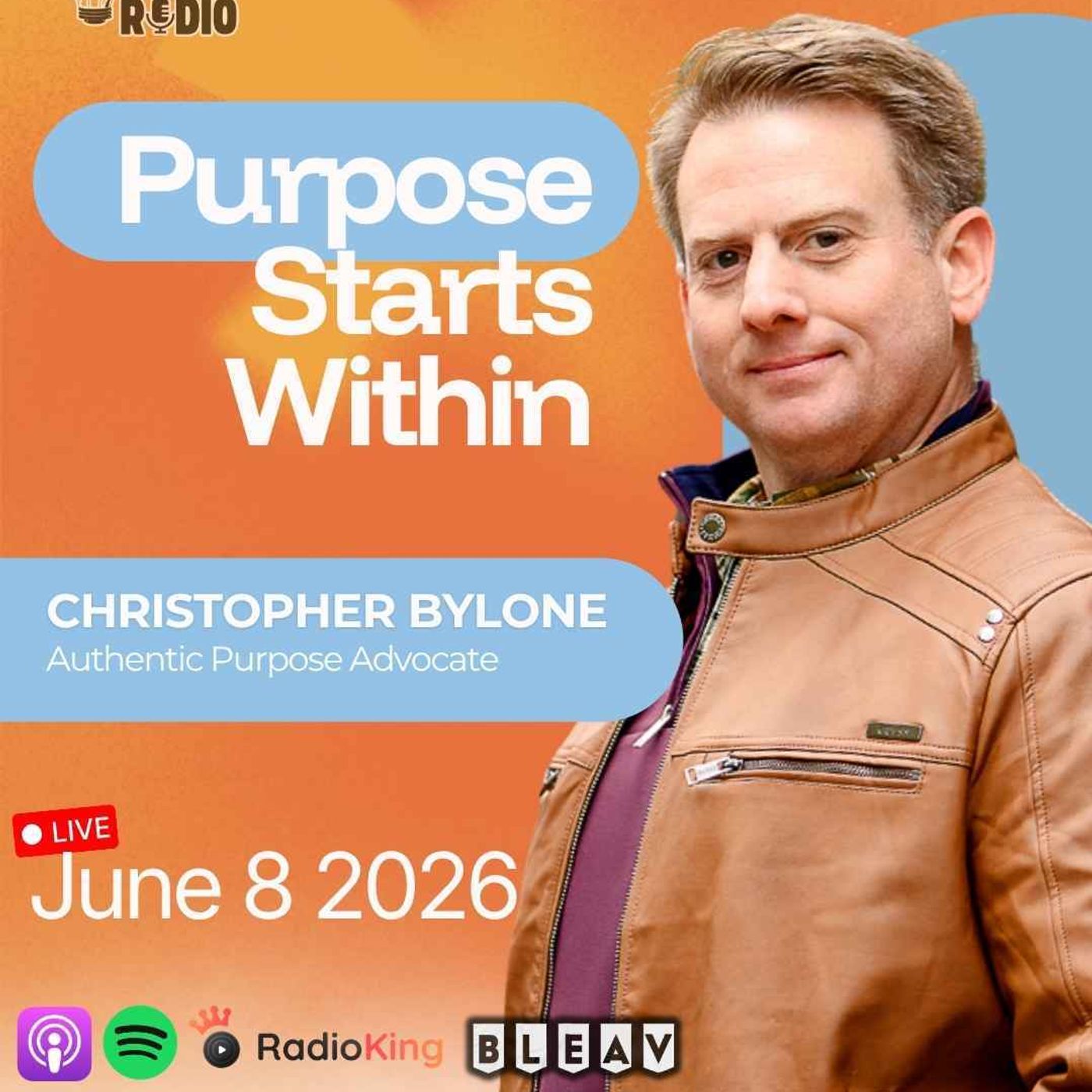
How Christopher Bylone Builds Real Workplace Belonging | 1,531
Christopher Bylone is on a mission to prove that belonging is more than a workplace initiative. It is a human need.
As the founder of Innovation Unbiased and host of the podcast I Know I Belong When..., Christopher brings together data, storytelling, and lived experience to spark meaningful conversations about identity, inclusion, and human connection. His work challenges organizations and individuals alike to move beyond performative efforts and build cultures where people genuinely feel seen, valued, and empowered.
A cancer survivor, advocate, and corporate leader, Christopher has spent years shaping belonging strategies for global organizations, leading multimillion dollar initiatives, strengthening employee communities, and helping transform workplace culture from the inside out.
But his commitment to belonging did not begin in the boardroom. It began with a belief that everyone deserves a place where they can show up fully as themselves. From founding a Gay-Straight Alliance in college to influencing corporate ESG and inclusion strategies, Christopher has dedicated his life to turning that belief into action.
Today, he continues to elevate voices, challenge assumptions, and inspire leaders to recognize that belonging is not a program or a policy. It is the foundation upon which people, teams, and communities thrive.
━━━━━━━━━━━━━━━━━━━━━━━
Enjoying the show? Support the conversation!
👉 Today’s guest: www.innovationunbiased.com
🎬 Need standout video, podcast, or branding content?
🌐 www.positivetalkproductions.com
📡 Listen on BLEAV:https://bleav.com/shows/positive-talk-radio/
🍎 Apple Podcast:https://podcasts.apple.com/ph/podcast/positive-talk-radio/id1592839447
👍 Like • 💬 Comment • 🔔 Subscribe
#PositiveTalkRadio #Podcast #Inspiration
━━━━━━━━━━━━━━━━━━━━━━━


Christopher Bylone is on a mission to prove that belonging is more than a workplace initiative. It is a human need.
As the founder of Innovation Unbiased and host of the podcast I Know I Belong When..., Christopher brings together data, storytelling, and lived experience to spark meaningful conversations about identity, inclusion, and human connection. His work challenges organizations and individuals alike to move beyond performative efforts and build cultures where people genuinely feel seen, valued, and empowered.
A cancer survivor, advocate, and corporate leader, Christopher has spent years shaping belonging strategies for global organizations, leading multimillion dollar initiatives, strengthening employee communities, and helping transform workplace culture from the inside out.
But his commitment to belonging did not begin in the boardroom. It began with a belief that everyone deserves a place where they can show up fully as themselves. From founding a Gay-Straight Alliance in college to influencing corporate ESG and inclusion strategies, Christopher has dedicated his life to turning that belief into action.
Today, he continues to elevate voices, challenge assumptions, and inspire leaders to recognize that belonging is not a program or a policy. It is the foundation upon which people, teams, and communities thrive.
Today’s guest: www.innovationunbiased.com
Hosted by Simplecast, an AdsWizz company. See pcm.adswizz.com for information about our collection and use of personal data for advertising.
Nature's Bounty (0:00): At Nature's Bounty, the belief is simple. You already have a brilliant body. Supplements just help support your journey. For over fifty years, Nature's Bounty has offered vitamins and supplements to help you eat, sleep, thrive, repeat. From magnesium glycinate for heart and muscle support to hair growth capsules for fuller, thicker hair, and probiotics with 20,000,000,000 live cultures for digestion.
Nature's Bounty (0:19): Nature's Bounty. It's in your nature to thrive. Learn more at naturesbounty.com. These statements have not been evaluated by the Food and Drug Administration. These products are not intended to diagnose, treat, cure, or prevent any disease.
Grainger (0:30): When you're a maintenance engineer in a beverage manufacturing plant, you keep production lines moving and quality on track because there is no room for slowdowns. With Grainger's vast selection of high quality motors, sensors, belts, and
Unknown Speaker (0:44): hard to find parts, You can
Grainger (0:46): get what you need fast and all in one place, so nothing gets in the way of getting the job done. Call 1800, click granger.com, or just stop by. Granger, for the ones who get it done.
Unknown Speaker (1:00): Now that Wendy's has these new biggie deals, everyone in the family can get what they're craving from nugs to JBCs. The parental units can get an $8 biggie bundle. The eldest who thinks they're so grown can get a $6 biggie bag, and the little one who can do no wrong can get a $4 Biggie bites. You know, assuming they have a credit card. No.
Unknown Speaker (1:20): I'm kidding. We take cash too. $4.06, and $8 Biggie deals for the whole family, only at Wendy's.
Unknown Speaker (1:25): Pricing participation may vary. Single items at regular price. Prices may be higher in Alaska, California, and Hawaii.
Kevin (1:32): And welcome to positive talk, everybody. I gotta tell you, we've got a great show for you today. And Christopher Bailon is gonna be with us, and he's gonna join us in just a second. Rochelle, he's been on the show before, and we just loved him, didn't we?
Rochelle (1:46): Oh, of course. And, Kevin, you know that we can't get out everything we could possibly grasp from people's experiences and their knowledge. So he's come back to share even more of his perspective and some upcoming things with us.
Kevin (2:02): I think that's absolutely great. Shall we begin?
Rochelle (2:05): Let's do it. Stay with us, everybody, and we're here at Positive Talk Radio.
Kevin (2:09): There's a moment in every life when you decide to ride.
Unknown Speaker (2:13): To stand taller than your fear.
Kevin (2:16): To speak louder than your doubt.
Unknown Speaker (2:18): To chase the vision that sets your soul on fire.
Kevin (2:22): This is that moment. And here, we walk it together with stories that awaken, voices that inspire
Unknown Speaker (2:29): And truth that set you free.
Kevin (2:31): This is Positive Talk Radio with Kevin
Unknown Speaker (2:34): And with Brichelle.
Kevin (2:36): Where hope has a voice. And that voice Is yours. You know, Michelle, I gotta tell you there whenever we do a lot of shows, I've done over 1,500 positive talk shows, and we have a lot of times. It's the first time that we have really met the guest, and then we have a conversation and it turns out really well. You know what I find is even more fun and it is even better is when we have a guest that we like so much, we invited them back because there's so much to talk about.
Kevin (3:10): And Christopher is that dude that, that we invited back because and so the second show is always even though the first shows are good, I think the second shows are even better. Don't you think?
Rochelle (3:23): Oh, yes. A 100%. And there's so much that we didn't even get to find out and so much time that has gone by for life to happen. So, Christopher, thank you so much to come back and share this time with us of all of the things that you're doing and experiencing and all that fun. But it truly is an honor to have you back here, and thank you also for that beautiful first conversation we got to have.
Christopher Bailon (3:47): Absolutely. Thank you so much for having me back and speaking about life happening. For those who are paying attention to the visuals behind me, you may notice that the wall looks a little different, and that is because I've moved. I no longer live in Charlotte Metro. I now live in the Pocono Mountains Of Pennsylvania.
Unknown Speaker (4:13): And what moved. Oh, go ahead. Happened a week ago.
Kevin (4:18): And what decided you to move to the Mountains Of Pennsylvania? Was it now you mentioned to me that you're gonna do this show, and then you're going for a hike. Is that have something to do with it?
Christopher Bailon (4:30): A little. However, if I'm completely honest, this move, so I moved decided to be closer to family. So my ex husband and youngest son live just north of Scranton, Pennsylvania. And that move happened last August. And so being a ten hour drive away from my youngest son, who is going to be starting high school this fall, I could not be the dad that I wanted to be ten hours away.
Christopher Bailon (5:04): And I am privileged that I have the financial means to make a decision to move to be closer to my family. I know that that's not the case for a lot of people. However, it was a decision that I made that I felt like was the best for me, best for my son, that I could be the dad that I know he needs, because I could not do it from Charlotte. Like I missed most of his football games last fall because his football games were on a Tuesday and my work schedule could not allow me to travel from Charlotte to Northeast Pennsylvania on a weekly basis. But his lacrosse games were on Saturdays and Sundays, and I made every single one but the last two.
Christopher Bailon (5:52): And the only two that I could not make is one because I was celebrating his older brother's nineteenth birthday and sent off to this fabulous internship that he's doing in San Francisco. And then I was actually working the last Saturday because I was doing a workshop with a church in Charlotte on how to create psychological safety and belonging in their congregation. So if I wasn't if I didn't have those two things, I would have made every single lacrosse game.
Unknown Speaker (6:20): Wow.
Unknown Speaker (6:21): And you know what they call people like you, Christopher? What? A good dad.
Unknown Speaker (6:28): I try.
Rochelle (6:29): I try. Yeah. Good man too. You've gotta have those internal things because, Christopher, I'm hearing you talk, and I'm thinking, you don't even have time to, what, sleep? Your house is almost put together beautifully behind you already in a week, and you have been able to still
Unknown Speaker (6:45): see the rest of the house.
Unknown Speaker (6:47): Right. Right. Of course.
Unknown Speaker (6:48): Of course. This is on camera.
Unknown Speaker (6:50): It doesn't exist if
Unknown Speaker (6:51): you can't
Rochelle (6:52): see it, you see. So you were smart to do that. But, you know, you you're helping the church. You're trying to be a good man for yourself. You're trying to be a good father and and do all these other things.
Rochelle (7:03): What don't you have time for?
Unknown Speaker (7:07): What don't I have time for? I don't know. That's a really good question. I think what I don't have time is dealing with the bullshit of our can I close on the show?
Unknown Speaker (7:22): Good. We we don't You just did. Yeah. It's okay to have a little less of that.
Christopher Bailon (7:30): You know, just dealing with this world, right? Like I, one of the reasons why I was doing this is I wanted to choose joy, right? I felt there was just, needed to, I did this move because I wanted to bring more joy into my life, and not being able to go see my son's football games this fall, or his lacrosse games, or be able to go on last weekend was his eighth grade dance and be able to go see him with his friend and take photos and those type of things. I would be missing those moments, right? And this is this is a pivotal time in any person's life, right?
Christopher Bailon (8:16): Yes, every every moment is pivotable. When you think about when you are raising kids, for those who have, my view is the high school years are probably the most important because it is time when they're starting to figure out who they are as humans. They're starting to figure out who they are as independent humans, And I want to make sure that I'm setting up my youngest son, just like I set up my oldest son, to be the best human possible. And that brings me joy. And going to his football games bring me joy.
Christopher Bailon (8:55): Going to his lacrosse games, sitting in the scorching heat all day on a Saturday and a Sunday, lacrosse game happens for an hour and then we wait for two hours till the next game happens. That is so enjoyable to me. So why wouldn't I put myself in a position to be able to do that?
Kevin (9:17): And Christopher, I can only tell you that my my dad was an executive with Nordstrom, was was gone a lot. He worked six days a week. But the most favorite memory that I have of him is when he was sitting in the football stands, and mister Nordstrom was on the other sidelines because his son played for the other team. And and I had I had an out of my mind game. And so for me, that is my favorite memory of my dad and me, even though we weren't necessarily together, he got to see something that I'm told is a very rare thing.
Kevin (10:01): And so not only is it for you, but it's also for your son.
Unknown Speaker (10:07): It is. It is. It absolutely is. So yeah.
Kevin (10:11): And and and bless you for being the man that you are because that is so important to the development of our youth. I'm a little frightened for the development of our youth right now, and and if somebody if you're there to help him get through some of the stuff that's going on in the in their world, the the more power to you.
Unknown Speaker (10:32): Yep. Absolutely.
Rochelle (10:34): And, Christopher, you're also spending so much time with your own other passions and organizations and things from the work that you're doing and things that are upcoming that are new. Do you wanna catch up on what's new or maybe just remind us of what your work is and where your passion lies?
Christopher Bailon (10:54): Yeah, so what my work is, is I'm here to create cultures of belonging everywhere, right? Some of the things that have evolved is, one is being honing in the work, right? So at the time of this recording on June 8, when we're recording this, I'm just about a year that I will celebrate being out of corporate, right? So Oh. I know.
Christopher Bailon (11:23): Right?
Unknown Speaker (11:24): Go, Christopher. That is awesome.
Christopher Bailon (11:30): Is there some reaction coming or something?
Unknown Speaker (11:31): Yeah. There was supposed to be an applause. I don't think, Kevin, we can hear it. I was waiting for it too. But
Unknown Speaker (11:36): you didn't hear the
Unknown Speaker (11:37): imaginary one. No.
Unknown Speaker (11:38): I'm so sad that you didn't hear the applause. Okay.
Unknown Speaker (11:42): It's okay.
Unknown Speaker (11:42): So go ahead, Chris.
Unknown Speaker (11:43): No Lady Gaga song coming on right now. I know.
Kevin (11:48): Well, let me let me try this.
Unknown Speaker (11:50): There we go. So yeah. So I what was I saying? Oh my god. I totally, like, just lost my train
Unknown Speaker (12:02): of You were a year in the corporate.
Unknown Speaker (12:04): A year out
Christopher Bailon (12:05): of You're at a corporate. So one of the things that I've been honing in on is how do we talk about belonging? And I am talking about it and that there's really five concentric circles or five arenas, whatever analogy you want to use, but it is belonging to yourself. It's belonging to your familyfriends. It's belonging to your community, be it your school, your church, whatever group you want to associate with, how do you belong at work and how do you belong in society at large, right?
Christopher Bailon (12:43): And so for me, it's how I've been focusing on this work the past several months. And oh, yay. There's comments coming in. This is fabulous.
Unknown Speaker (12:53): Hey, that's actually my dad, Christopher. So, we've got dads in tune right now. Oh, well. Hey, dad. Kevin, Rochelle, and Christopher.
Unknown Speaker (13:00): Hey, dad. Love you.
Christopher Bailon (13:02): Wow. That's awesome. Another good dad. See? Like, we are just bringing them all guys in.
Christopher Bailon (13:07): Are doing great. This is this is awesome. So yeah. So so been working on that. The podcast is currently in season three, which is really exciting.
Christopher Bailon (13:20): So, and the cool thing that I'm really privileged about is that I have enough guests set to record that I have, will have a show from now until the end of the year, which is like, I'm so thankful for, and you probably can appreciate making sure that you have enough guests lined up that you don't have to worry about producing a show, you know, so, and the podcast is I Know I Belong When, and we've been having some really great conversations about belonging. And the cool thing about, as we continue to go on into the upcoming seasons, is the guests are really starting to diversify. You know, when I started the show, all the guests were in my phone, right? Season one and season two, they were people who I knew to were fellow chief diversity officers, chief people officers, other practitioners in the space that genuinely said, yeah, I'm willing to be a guest on this untested show, right? Well, now as the show has gotten to be known and people are starting to listen to it, I'm starting to have people to reach out and been like, I want to be on your show.
Christopher Bailon (14:30): And the guests are not all coming from corporate America, right? I just did an interview with a woman who has her own publishing firm. And she has a nonprofit organization that helps underrepresented authors get published, right? So you wanna talk about somebody who's doing true equity work in the world, she is giving people an opportunity that the major book publishers would never pay attention to and would never publish their story, and she's making sure their stories get published, right?
Unknown Speaker (15:10): Christopher, So those we
Christopher Bailon (15:11): are the type of people that I wanna talk to.
Kevin (15:13): Oh, and I didn't mean to interrupt you, but those are the type of people that we love here because we have a lot of folks who would love to publish a book, but it's a minefield out there. So feel free. If you can give us her name, Rochelle will write it down. We're gonna reach out to her, but but also anybody that's listening can can reach out to her as well. What who who are we talking what's her name?
Christopher Bailon (15:39): Her name is Phabie Pressler, and she is based in Charlotte. And she has a organization called Spark Publications, but the nonprofit she runs is called, oh God, now I'm just totally blanking on it, Radiant Chapters Collective had totally, I wasn't prepared to answer that question. I just had like a memory lapse.
Unknown Speaker (16:07): You so much.
Christopher Bailon (16:08): Radiant Chapters Collective. And she, what I will just say is that she's always looking for people also to be sponsors, right? Because this work is not cheap, right? And so she needs folks, it would be great for her to be able to publish as many people as possible, but this work costs money. And so for her to continue to do it, she needs supporters.
Christopher Bailon (16:34): I was happy to give her some of my money as a sponsor. They had an event in the fall, or this past spring to talk about the authors that they were supporting, but this work cannot continue without the financial support of other individuals.
Kevin (16:54): Yeah. Would you bring up a very, very, very, very interesting point, and that point is that there are people that are working to do good in the world, and sometimes the people that are working to do good in the world, they don't have a great deal of resources because they are giving their resources away to the work that they're doing. And so consequently, if you do have the means and you are able to help somebody who is helping other people and you would like to be part of that, but you don't wanna do it yourself, that this is a perfect, segue for somebody to help her be able to get to help
Christopher Bailon (17:33): other There there are great people out there who are doing really great work, but what they, they don't need another volunteer. What they need is your checkbook.
Unknown Speaker (17:42): Exactly.
Christopher Bailon (17:43): Right? So, you know, and, you know, I am happy to share the work that she's doing, hopefully by me sharing this story of hers, that there will be people out there who want to help her financially or other in kind donations, right? So like, it's true equity work, right? Like I get to do this work and I'm doing it with corporations and I am teaching people on how to do it. She's doing it, And sometimes she, you know, there's people like her who's like, am I a practitioner?
Christopher Bailon (18:21): Do I do this work? And I'm like, you don't need to quote unquote have the title of a practitioner to do equity work, right? Because the way you're doing it. And so I'm really thankful to her and others who are out there changing the world one book at a time.
Unknown Speaker (18:40): Yes.
Kevin (18:40): And Christopher, I will tell you this, and this is from personal experience. On the last day that I did my show in 2003 on KKNW, 11:50AM in Seattle, they said, accounts receivable says you owe some money. And I said, well, how much do I owe? And it's like, oh, $10,000. Oh, really?
Kevin (19:04): That's what that was the look I gave them. It was like, And they said, well, you're gonna have to come off. You're we'll give you one more show to say goodbye. And then unless you come up with $10 tomorrow, we're gonna pull you off the air. And so during that show, I said, is there anybody out there that would like to see Positive Talk Radio continue?
Kevin (19:28): Then this is the price. And I need $10,000, and I need it soon. And you know what? Somebody came through. And they bought the show for $10, paid off the so my point here is it's important that we know that people know that people are doing great work, but also that there's a financial cost to it that cannot be borne by that individual forever by themselves, that it needs to be a collective effort.
Kevin (19:59): Do you agree?
Christopher Bailon (20:01): Me? Yes. Yes. Yeah. I mean, well, I mean, my podcast is is also like, hey.
Christopher Bailon (20:08): I'm looking for sponsors. Yeah. Right? Somebody, I mean, I am I am producing this podcast out of my own pocket at the moment, right? And so, I need sponsors.
Kevin (20:21): And do you do it because you have a passion for it and you're good at it. And the podcast, by the way, is called again
Unknown Speaker (20:30): I know I belong when.
Kevin (20:32): Yeah. I know I belong when. And because it's a good podcast and it comes from your inner heart, from who you are as a as a human being, it will continue to exist, and it will continue to grow because it is your passion. It is what you do. And that I can't think of any more powerful thing in the universe than somebody making a decision to do something with passion.
Unknown Speaker (21:01): Yep. Agreed. Yeah.
Kevin (21:03): Thank you. And so congratulations. And and by the way, we did we play points to ponder when you were here last time?
Rochelle (21:13): Think we were barely trying to start the ideas, yeah, of those. So let's take a look at one of them and make sure everybody that you know, you can visit iknowibelongwhen.com and find the episodes about the show and so many other things. Also, everywhere that you can listen to it is included on that website. So make sure you visit iknowibelongwhen.com, and you can go and check that out for yourself and support Christopher as well.
Kevin (21:41): There are two that I want to play, but I'll only play one. Rochelle, is it declaration or we are all one?
Unknown Speaker (21:48): We are all one.
Kevin (21:50): Here's another point to ponder by Positive Talk Radio. Look at the world today. We see conflict, poverty, and division driven by the tragic illusion that my people are separate from yours. This belief in separation is a single greatest obstacle to peace. The truth is humanity is a single global body.
Kevin (22:09): When one part of that body, a child in poverty, a family fleeing violence, is in pain, the entire system suffers. We cannot truly be well while our brothers and sisters are wounded. There's no us and them in this body, only us. Our sacred responsibility is to move past labels and see the shared light and common dignity in every single person on earth. Justice for one is justice for all.
Kevin (22:37): Compassion for one is compassion for all. This is the blueprint for global survival. We are one global family. Let empathy be our border, and let love be the only banner we carry. And by the way, we're talking with Christopher Abilone, and I know that you resonate with that to some degree.
Christopher Bailon (22:59): Yes. Because as I was listening to that, I was going, I know somebody who made a quote about this, Martin Luther King Jr, Injustice Everywhere, one where is it injustice everywhere? And then, what played about justice? Right? Because if we're truly doing, like, literally, like, five seconds before that, I was like, oh, I know what I'm, how, what I'm going to say when I come back.
Christopher Bailon (23:26): And you stole my thunder. That's okay. It's your show, not mine. But but what I I will say is that, you know, yes, to your point, humanity, we're all one. To truly create a culture where everybody knows that they belong, and when I say culture, I'm talking about society at this point.
Christopher Bailon (23:51): It has to be just. One of the things that I added into the formula publicly, to the belonging formula, we talked about the belonging formula on last show, right? And I talked about how it was the outcome of equity plus diversity times inclusion to the power of accessibility. I've always also added in the piece that it's divided by justice, but I never really talked about it publicly because my positioning was that I was doing belonging really in the corporate space. And if we're being truly honest about justice work, we would be trying to dismantle capitalism.
Christopher Bailon (24:28): That's not what I'm here to do. Just don't take that headline and run with it, folks. Christopher is not here to dismantle capitalism. But if, when we're talking about justice, if we were truly talking about justice in its most purest form, there would not be a capitalistic society. Because having a capitalistic society, there are going to be the haves and the have nots, and that's not just, right?
Christopher Bailon (24:52): So we are going to try to make this capitalistic system as just as possible, right? And so for me, to create a society that has, that you know that you belong, it has to be just. And so justice needs to be equitable. Justice needs to be diverse. Justice needs to be inclusive.
Christopher Bailon (25:18): Justice needs to be accessible. And so that's why in the formula, I say that it's divided by justice, because if you can't get to justice, then you're never going to get to true full belonging. And so but there is a difference between doing this work in the corporate space, and doing this work society writ large. And actually, these are two books that I'm actually working on at the moment, that are not public yet, but it will be the belonging formula, and then the belonging formula divided by justice. And so the first belonging formula book that I'm working on is up to accessibility and really focused on corporations and other organizations.
Christopher Bailon (26:04): And then the second book, Belonging Formula Divided by Justice, will be the book about how do we create a society where everybody knows that they belong.
Rochelle (26:13): That's awesome. And, Christopher, please remind us of your formula because it's brilliant.
Christopher Bailon (26:19): Yeah. So it is so it's belonging equals equity plus diversity times inclusion to the power of accessibility divided by justice.
Rochelle (26:32): Oh, damn. That's good. How did you come up with that? It sounds like something Kevin would say.
Kevin (26:39): I'm not that smart. He's a lot smarter than I am.
Christopher Bailon (26:41): You don't say that. So We're all we are all smart in our own way. So I come from the people analytics space. Right? I'm a data guy.
Christopher Bailon (26:53): I love data and so, what I say, if something can't be measured, it can't get done or in the positive talk of it all, what gets measured gets done. So, and I also know that belonging is very touchy feely. It's kumbaya. It's qualitative. And so if we want to take something that's qualitative and get business leaders, specifically business leaders, to understand how to solve for it, we need to apply some quantitative theory to it.
Christopher Bailon (27:29): And so I said, okay, if we're gonna apply some quantitative theory, how do I turn it into a math formula? Because that's what businesses understand. They understand math, they understand numbers. And so to be able to take this very kumbaya, touchy feely thing about I know I belong and turn it into business results that can be measured and even business results for nonprofits, schools, you name it. We all work in metrics, right?
Christopher Bailon (28:01): We're all what is our score? What is the best out of a 100? We're all trying to get to that perfect 100. Never gonna get there. Live an imperfection.
Unknown Speaker (28:14): Almost did, Christopher. I swear.
Christopher Bailon (28:16): Right. Well, you know, I I've I've, I've spent a lot of time figuring out that it's okay to be imperfect. And so, but turning into some type of quantitative number, right, if we wanted to say this is your maturity on belonging, well then I gotta quantify it somehow. Yeah. And so that's how I came up with the formula.
Unknown Speaker (28:42): That's awesome.
Kevin (28:42): It's a great formula and I love it. Now this is for the corporate guys, the CEO out there that is that is running a company and is contemplating changing the culture from what it has always been to one of inclusion and diversity and and and all of those things and creating a better corporate environment. And sometimes the only way to reach them is to say something along the lines of, well, let me let me paint a picture for you. You lower turnover. You create better employees because they care, they have better lives at home, they their productivity goes up because they're happy being where they are.
Kevin (29:31): And so consequently, that money drops straight to the bottom line. Low turnover means your money drops to the bottom line. A high higher productivity means that as well, because that is sometimes the only way to reach those people is rather than
Christopher Bailon (29:47): You do it from need talk dollars, but it's Yeah. So what I would also say is that there are other metrics in this work that I would probably say leaders need to pay attention to, and they're the invisible metrics. A lot of people will call them the soft costs, right? But I don't call them soft, I call them invisible. So let's take for example, discrimination lawsuits.
Christopher Bailon (30:16): When an organization is sued for discrimination and they have to pay out a claim, where do you think that that budget line sits?
Kevin (30:29): I don't know that it does sit anywhere, does it?
Christopher Bailon (30:32): Yeah. It sits in legal. It's in it's in legal's budget. Right? Yeah.
Christopher Bailon (30:37): Okay. That budget doesn't hit a manager's p and l.
Kevin (30:42): So it doesn't affect his bonus?
Unknown Speaker (30:44): Ding.
Christopher Bailon (30:47): What do you do? You shift the cost from legal and put it into the manager's p and l. If they were truly responsible for that issue, right, we did that at a past organization because we would have EEO complaints like there was no tomorrow, right? And the managers were not doing anything about it, right? They were just like, well, it's not my problem.
Christopher Bailon (31:10): Like HR, that's you, legal, that's you. Well then when we shifted the cost of the payout to the manager's P and L, and then it impacted their bonus, guess what they did? They started paying attention. Oh, I bet. It's it's as When you the talent acquisition cost.
Christopher Bailon (31:34): You talk about turnover, Kevin. Talent acquisition cost. All the costs that it for talent acquisition normally sits in talent acquisition's budget. Doesn't sit in the manager's budget. They don't
Unknown Speaker (31:45): Oh, it should.
Christopher Bailon (31:46): So we shifted the cost, right, of the of the talent acquisition budget for certain roles. Right? Because, you know, like they would have, you know, direct reports and the direct reports would maybe last, you know, maybe sixty, ninety days and then the manager goes, yeah, I don't like this assistant manager. And I'm like, well, why? And they're like, well, they're just not working out.
Christopher Bailon (32:08): Well, did you invest in them? Did you train them? Did you are you helping them figure out where they're not performing well? And no, I don't have time for that. But you do have time to make us go out and hire a new person and let this person go and now we're going to have to pay them a severance and so but you have time for that?
Christopher Bailon (32:29): Well, then when we started putting all that cost into their P and L and it was impacting their profit margin, which then impacted their bonus, guess what? They started investing in those leaders. They started actually being smart about who they were hiring because they weren't just hiring another warm body, They were being intentional about who they were going to make the offer to or promote into the role. And then when they brought them into the role, then they started to invest in their development and making sure that they were going to be successful in the role because then that turned their turnover down.
Kevin (33:05): When is that book coming out, by the way? Because it's I
Unknown Speaker (33:11): don't know that I actually thought about writing a book like that, but maybe you have just given
Rochelle (33:15): me another You know, I just think it is genius because not only are you not saying, hey, let's start over and replace everybody you've looked at hiring. It also gives people a second chance to provide them with the tools to be a leader when they may not have that. If they don't know how to be a leader and they can't train that person because they don't have that time, that's giving everybody a second chance and it's saving so much money. And the time
Unknown Speaker (33:41): And time.
Unknown Speaker (33:41): That is probably like
Unknown Speaker (33:42): And time.
Unknown Speaker (33:43): Shut down completely.
Christopher Bailon (33:45): Right. Right. And and and you're not making somebody feel bad and you're not potentially impacting, you know, when somebody loses their job and they lose their paycheck. You don't know if they're the sole bread or winner for their family and thinking about how they're gonna be able to care for their children and pay rent and all those things. Right?
Christopher Bailon (34:01): So there's other human components to it. But if we're purely just looking at the cost of the business. Right? And, Kevin, I don't think we need to somebody needs to wait for me to write a book about it. Right?
Unknown Speaker (34:12): Well, apparently they do because they know what we need.
Rochelle (34:15): Yeah. I think we do, Christopher. I'm sorry. We really do if you can help us out a little bit because also it's if somebody loses their job, they know why. Do you know how many times people lose their job because of what you just said?
Rochelle (34:27): Oh, it didn't work out. That person doesn't even know where they went wrong and why they lost that job. But now there's a reason for everything. So nobody is confused about all these little things. Right?
Christopher Bailon (34:39): Right. Well and so look. And and there are people who are much smarter than me in this area of expertise, right, that this is they, you know, I'm just, I'm coming at it from a, here's a cost perspective. When I'm looking at it from a DEI point of view, right, in how, you know, what is creating culture of belonging and how is this going to impact your top and bottom line, right? That's the approach that I'm taking.
Christopher Bailon (35:04): The how, right? The folks on, there are much smarter people than me who are going to tell business leaders on how to have those crucial conversations, on how to make sure that they're doing the development correctly. Yeah. Can I talk about it? Am I intelligent about it?
Christopher Bailon (35:19): Yes. But there are people who I would say they should be the one writing the book, not me on that particular thing.
Rochelle (35:26): But, Kevin, they missed the part of what he just taught us.
Unknown Speaker (35:29): Yes. So there.
Unknown Speaker (35:32): Break a table.
Unknown Speaker (35:35): That's why
Unknown Speaker (35:35): I talk
Christopher Bailon (35:36): about it everywhere. That's why every public platform I get to talk about, I you know, I talk about how this is not a soft cost, it's an invisible cost. And how are you making the cost visible? And the cost that may feel soft that you don't necessarily catch in a P and L. I don't know.
Christopher Bailon (35:55): I could remember being in the corporate space and we would be having a meeting about something and we would get to the end of the hour and like there was either no decision made or the decision that was made was like off the wall or how much time we spent. And I went, can we please calculate how much time, how much money we just spent in this last hour, right? Because we're all salaried folks, we're not punching a clock, nobody's thinking about the time, right? I know everybody's salary. I did this when I was in people analytics.
Christopher Bailon (36:29): Because we were having some meetings and it wasn't like, I felt like we weren't making decisions and we were just meeting after meeting after meeting. And I finally came to a meeting and I said, okay, on this topic, I would like to tell you how much money we have spent in salaried time to get to where we are today and we have still made no decision. And at that point, I think we were around $75,000 right, in paid time, because being in pain to analytics, I knew everybody's salary. And so I went and calculated everybody who was in that meeting, what your hourly rate was, how many times we met about that topic, and then I put it on a slide and went like, and this is how much it cost us so far to get to a non decision. Will tell you, by the end of that meeting, we had a decision.
Rochelle (37:24): I was gonna say, how did they react? Was it silent for a moment?
Christopher Bailon (37:28): It was silent. They were like, what? Like, had like really big eyes, but again, it was like, this that's the soft cost people aren't talking about.
Unknown Speaker (37:37): They didn't know. Right? Yeah.
Christopher Bailon (37:39): Well, it's because it's not tracked, but you definitely know you're tracking the hourly worker because you know how many hours they're working, right? If you're paying by them by the hour, you're gonna track, you're gonna like, how am I using their time? Well, they can't go over forty hours because then we have to pay overtime. And so what are we Like people would track hourly workers. Now, I'm not saying by any stretch of the imagination that you need to be tracking everybody's time, right?
Christopher Bailon (38:07): Like, because believe me, I've worked in organizations where they tracked your badge in and out. And I was like, you're really gonna judge my performance on my badge time in and out of the office, like really? What I'm just saying is think about the decisions you're making and how much time you were spending on that decision and the leaders that you've had to pull in. Like, did we really need 15 people in this room to make this decision? Right?
Christopher Bailon (38:34): Because how many people actually contributed to the decision or were they just sitting there not able to do other work? Right? So just think about the efficiencies that you could come. I know this totally got completely off track of positive talk, but
Unknown Speaker (38:51): No. This is where it's supposed to go.
Rochelle (38:52): Kevin, you asked the p and l question. I it replays exactly how you said it about the p and l and the profit loss and the turnover rate and all those things, and not a single person has ever answered it in the way of, well, this is how you fix it.
Kevin (39:09): Until now.
Rochelle (39:10): Yeah. I've just I'm I'm blown because it was much more simple than I think I made it up to be. Well,
Kevin (39:17): and and the and the art of unintended consequences is really big in the corporate world. I I there's and there's something going on right now, Christopher, and I'm not gonna use the name of the entity because, my lawyer's on vacation, and I don't wanna get sued. But there is a there's a company out there that has been number one in their world for, like, forty years. I remember when they first started years and years ago. I was a kid, and they've been doing it ever since.
Kevin (39:53): And they a new group came in and decided that a a one of the members that had been there for over thirty years, thirty years, was going away. And they and they said, you've got till 5PM to get out of the building. And they did this to a couple of people. And so what ended up happening was one of the major broadcasters came to the oh, I was it's kinda crude up there. One of the major players came to them and said, what you're doing is wrong, and this is not the way this program goes, so they fired him.
Kevin (40:31): Now Yep. What are the unintended consequences that those management people are going to face over time? Because nobody's gonna ever trust them again. Nobody's gonna ever believe in what they say because they they're they're lying to them. So my prediction is that particular entity will go away within the next three years.
Christopher Bailon (40:55): Oh, I agree. You can already see it.
Unknown Speaker (40:58): And you I think you know what I'm talking about.
Rochelle (41:00): Fast if something happens, it can ruin everything.
Christopher Bailon (41:05): Well, I mean, we live in a society where news is literally at our fingertips.
Unknown Speaker (41:11): Mhmm.
Christopher Bailon (41:11): Right? News travels at the snap of finger. Right? Breaking news, it's all on our phone. Right?
Christopher Bailon (41:18): I bet you if something broke right now, we would all get an alert on our phone that news broke. Right? And so we would be able to react in real time. Before the age of smartphones in our hand, right, we had to wait to the evening news to hear what the breaking news of the day was, right, or unless it was over the radio, right, or whatever, right? But, so we now are able to react, I think it's also part of the reason why I chose to come to the Poconos because it's a much simpler life.
Christopher Bailon (41:56): Like, I love Charlotte, right? But let me tell you, I had every resource, every want under the sun, right? I didn't have to think about where I was going to go to eat. I could literally eat at a different restaurant every day and never eat at the same place. Mhmm.
Christopher Bailon (42:16): Here, especially where I live in the Poconos, I got two restaurants.
Kevin (42:24): And one is a twenty four hour cafe, isn't it?
Christopher Bailon (42:29): No. But what I'm saying is like, I'm living a much simpler life. Yeah. Right? And I'm able to unplug and not feel overstimulated and just be able to relax.
Christopher Bailon (42:45): Like, when the sun goes down here, it is dark. There is no street light. Right? Like, if I wanna get up in the middle of the night, I have to have a flashlight unless I turn lights on.
Unknown Speaker (42:58): Mhmm.
Christopher Bailon (42:58): Right? And I have now learned and over this last week where all the light switches are really quickly. So turn a light on like, you know, to right? But because there's because there's no street light. Like, when it gets dark, it's dark.
Christopher Bailon (43:12): Love it, oh my God, like I'm having such the best sleep I've had in forever, right? I don't have any light pollution, right? So to me, that's part of me bringing joy, it's helping me feel rejuvenated, But the long story short is, we are living in an age to Rochelle's point that like, things happen like at the snap of a finger and we actually don't have time to breathe to understand what the consequences are, right? And we need to be able to take a pause and then like, is this the right decision? And then when you make a decision, let it play out.
Christopher Bailon (43:54): This is the other thing that I think business leaders do not do, is especially, Kevin, you probably understand this just as much as I do and probably Rochelle too, but because we live in this over publicly traded, right, the stock market, most organizations are planning to the next quarterly meeting.
Unknown Speaker (44:20): That's it.
Christopher Bailon (44:21): Yep. Right? They are not like, they are going, well, what is the investor just gonna say next in at next quarter and next quarter? And they're not actually letting things play out. Sometimes the decision you make is going to take years to see the benefits.
Christopher Bailon (44:42): I mean, that's when I started my previous organization, when I came in as their chief diversity officer. The reason I got hired is because I said to my now former boss, I can't promise you that we're going to fix everything tomorrow. What we are going to do is we are going to create a plan and some of the decisions that we make and are going to have to invest in, we are not going to see the fruits of our labor to three to five years down the pike. But you need to understand if you don't make the investment now and you don't do the work now, you're never going to see that come to fruition play out, fruits of our labor, whatever analogy you want to use, we will never get there. And so we're going to have to make decisions that will have a ripple effect as we go down the pike.
Christopher Bailon (45:38): But if we don't make that decision, then there are going to be it's gonna get harder for us to get to this goal that you want us to get to. Yep.
Kevin (45:45): And how many of those executives will turn around and say to you, yeah, but if we do that, I may not be here in three to five years. And because Yeah. Wow.
Christopher Bailon (45:57): Right? Are you but the the investment right? Like, are you investing in the company, or are you investing in yourself?
Kevin (46:05): Oh, I know the answer to that. They're all investing in themselves.
Unknown Speaker (46:09): Right. Right. They're investing in themselves, but but what but the so what I'm trying
Rochelle (46:13): do is their own investment time on themselves by doing that.
Christopher Bailon (46:18): Right. Well, because I'm sure all of those leaders, even after they leave, they have stock options, and so they would want that stock to continue to grow, right? So, like, why not invest in the company and then like, well, if I'm not here in three to five years, okay, great but your stocks are going to still be around and they're going to be lasting long after you leave the organization and you want that stock to continue to go up. Yes. Right?
Christopher Bailon (46:41): So, however, we also have the pressure from the street, the street being Wall Street, that they don't let things play out. They don't wanna see results in a quarter. Right? And so sometimes they don't understand a way a business operates, right? Some decisions you make in a business is going to take maybe two, three, four, even maybe six quarters to for it to actually come to an actualization.
Unknown Speaker (47:13): Yep. But the street doesn't they they they it's a sugar rush. Mhmm. They wanna get the high now.
Rochelle (47:22): When you said take a pause, and we have to play that for you, Christopher, but you to be able to really paint a really clear picture for us and help people realize in what they're doing for themselves and other things and instant gratification. Yes, you may get it instantly, but there's also effects to that that play out. They're probably not nearly as good as anything you could have imagined if you had just waited and trusted the process along the way. So let's play this for you. And everybody please know that if you want some help with Christopher when it comes to these things, you can go to innovationunbiased.com and help where he's help help where he's providing to build off of things that maybe don't fit the status quo and all that in the above.
Rochelle (48:11): And then we come back. I really, really wanna touch on always Chris. Just Christopher, never Chris. So take a look at this, and we'll be with you and everybody.
Kevin (48:22): Because he said it, taking a pause. Here's another point to ponder by Positive Talk Radio. Have you ever stared at a message and thought, I don't have the energy for this today, and then felt guilty for not replying right away. You know, we were taught that being good means being available, but being healthy means knowing when to pause. You could be loving and still need space.
Kevin (48:48): You can care about someone and still say, oh, not today. Protecting your peace is not selfish, it is responsible. Because when you show up, it should be from fullness, not exhaustion. If that sounds like you, stay with us. You're listening to Positive Talk Radio, where stories of hope live.
Kevin (49:10): And first of all, I gotta say, because Rochelle sent me a message, no. Your your Internet's fine. Okay. Good.
Rochelle (49:16): You look great. Glitching on my end. You guys were looking fuzzy, so I wanted to make sure.
Kevin (49:21): That's alright. It's probably oxycodone that I had last week. Anyway, Christopher, you Rochelle had a great question. And so
Unknown Speaker (49:31): Oh, yes.
Rochelle (49:32): About the instant gratification and delayed gratification is what it would be. Right?
Kevin (49:38): Well, and also about Christopher and yes.
Rochelle (49:42): Always Christopher, never Chris. Please tell us about that.
Christopher Bailon (49:46): Yeah, absolutely. One, well, thank you for that video because I needed a reminder taking and a being okay to, you know, just be and make sure that you're showing up with a full cup. Yep. So, because if your cup isn't full, how can you pour into others? What you can't see on the screen right now is I have a dog that is very much saying like, I'm ready to go on this hike.
Christopher Bailon (50:15): I am like trying to keep him at bay with my hands. So anyhoo, so to answer your question, Brachelle, always Christopher, never Chris. So I think we talked about this a little bit on the first show that I always identify as Christopher. If somebody calls me Chris, I think you're not talking to me. So for those folks out there listening and you potentially want to be a oh, and here's here's said dog.
Christopher Bailon (50:44): He's coming into view.
Unknown Speaker (50:47): I got it. Daddy, I wanna go play now. Let's go play.
Christopher Bailon (50:50): I know. He's like, it's almost it's time. It's time. It's time. Thank you for allowing him to come on camera.
Christopher Bailon (50:57): Of course. But so what I was saying is that people still, I find it so hilarious that people still reach out to me and refer to me as Chris, either in a LinkedIn message, or in an email, or even when they call me and they say Chris, and I'm like, folks, it's really apparent that I am always Christopher. Like, it is a hashtag literally in my LinkedIn bio. Like, I'm making it really easy for you. Really easy.
Unknown Speaker (51:29): Really easy.
Rochelle (51:29): To go by Chris, it would be Chris, I'm pretty sure.
Christopher Bailon (51:32): Exactly. Now I used to be I used to go by Chris when I was younger. Right? So the the a quick the quick story, why always Christopher? So when I was in high school, I used to be able to sing Christine Daae's part from Phantom of the Opera, Clear Isabel.
Christopher Bailon (51:52): I made a lot of girls mad because I was and a I had a much clearer soprano voice than they did. Thank you. I'm a little mad at my choir teacher for breaking my falsetto in high school. But, so when I would pick up the phone, so Brichelle, you you this might be a little dated for you, but there was no answering machine when you would call my house. Yeah.
Christopher Bailon (52:24): So you would need to leave a message. And me, I said earlier in the show, I have the memory of Dory. Well, I did then and I still know, and I would forget to leave a message for my parents. Hey, so and so called. Well, then they would finally reach my parents and been like, we've been trying to get ahold of you.
Christopher Bailon (52:45): We left messages with your daughter. And they're like, no, you left a message with my son only child, right? So there was only one Chris in the household, right? And so, but that carried on. When I started in the working world, I used to go by Chris because it was just easier.
Christopher Bailon (53:04): Everybody called me Chris and I just went with it. But people would refer to me as Ma'am. Hi, ma'am. Fuck. Right?
Christopher Bailon (53:14): Because I had a high pitched voice. And so because the only right before there was Skype, right, it was welcome to Cisco Systems. Right? And we only had we only had conference calls, and people could only make assumptions on who we were based off of our voice. There was no visual cue to see who I am.
Christopher Bailon (53:39): Yes, can you make a really good assumption right now that I'm a man? Yes, you can, right? Right. Especially because my pronouns on screen are hehim. I make it really obvious for folks.
Christopher Bailon (53:50): But before that, right, so people, so I decided that I wanted to make sure that people understood that I was a guy. Right? That was my identity, and so I went by Christopher. So Rochelle, to your point, if people go to alwayschristopher.com, I am writing a book about who I am as a thought leader. And because the work I do is not making a widget, right?
Christopher Bailon (54:17): I don't make a physical thing. I am here to provide my advice. People need to buy what's up a year in my brain, also here at heart. They need to trust me. And so what I am doing is I am writing a book that is introducing me to the world as the thought leader that I am.
Christopher Bailon (54:37): And it is designed and I decided that I did not want to make it a book that people had to buy. Because why should they buy something to get an introduction of me? I wanted it to be open access. And so I was I there was other advice that I got to turn it into a blog. So And that's what I'm so I'm writing this blog, basically like a book.
Christopher Bailon (55:02): And it is also not a linear memoir of Christopher's birth to now I'm going to be 45 in 2026. Right? What it is, it is a collection of theme stories about who I am. So for example, one of the chapters, one actually, the first chapter that I wrote for this book after the Always Christopher chapter was being anti racist. And there are three moments currently that have cemented why I am anti racist.
Christopher Bailon (55:37): When I was seven, when I was in college, and the murder of George Floyd. Now, if I wrote a memoir that was a chronological, here's what I did in the seventh grade, here's what I did in right? Those stories would be so far apart, nobody would be able to connect the learning. So I decided to write them as themed chapters, being anti racist, my coming out story, my commitment to feminism, my my view on what is what is networking about all those things. And so I am categorizing them in different cap categories, who I am, what I learned, how I view the world, how I lead.
Christopher Bailon (56:25): But the idea is that these are just theme stories that people will get to learn about me. Also, because it's a blog, I will, not may, I will update it because I'm sure there are going to be new lessons
Unknown Speaker (56:39): Yeah.
Christopher Bailon (56:40): That I learn that All the time. All the time. Right? And so reshape my commitment. Or there might be new chapters that I have no idea I need to write about now Mhmm.
Christopher Bailon (56:53): That I will write about in the future.
Rochelle (56:55): Well, they're your values. Sometimes your values change, but they're there, and these are the reasons for them. That's what's beautiful. Right.
Christopher Bailon (57:03): And so the idea is that this is a living a living document.
Unknown Speaker (57:07): Congratulations.
Christopher Bailon (57:08): So if there is a change to a chapter, especially a significant change, there will be a note that this chapter was edited. But the intention is that this will be a living book and will be able to be updated on a regular basis. And yeah, so if you go to alwayschristopher.com, you can learn the larger story about why I'm always Christopher. There's a great story about my mom in there. She also wrote the foreword to the book.
Christopher Bailon (57:38): So there's a chapter from her. Yeah, so definitely go check it out.
Rochelle (57:45): Congratulations. It reminds me too of it's not pieces of Chris. It's Christopher at his whole entirety. So thank you for creating that, Kevin. I think we all should maybe do that because it'd be good for us and ourselves.
Kevin (57:59): Well, you know, this is 2026. And do you do Prichelle, do you remember you wouldn't remember this guy. Because but do you have any idea who Wayne Newton is?
Rochelle (58:10): I've heard the name. Yes.
Kevin (58:13): And and Christopher, you'll know who Wayne Newton is because in the early seventies, he grew up and he had a very high voice. It was natural for him. And so he sang at at a very high notes. I'm sure he was a soprano if if if some something like that. And but in those days, that was frowned upon.
Kevin (58:40): So he spent most of his time trying to sing in his lower register and growing a mustache. You remember that, Christopher? And and stuff so that he could be a man.
Unknown Speaker (58:50): It didn't work for him. It didn't work.
Kevin (58:52): No. It didn't. Because because his his his whole persona was that voice that he had, and he was in Las Vegas for, like, a billion years and and stuff. But but I'm I'm hopeful that we're getting past the stereotypical, oh, if he's got a high voice or she's got a low voice or we're all we're all human. We're all Judgement.
Kevin (59:16): We deserve to be judgment free so that we can all live free.
Christopher Bailon (59:22): Best display. So at the time of this recording, the best display of diversity of all this did you watch the Tonys? The Tony Awards?
Unknown Speaker (59:31): I didn't.
Christopher Bailon (59:32): Okay. Let me tell you. Go back and watch that. Because if you about what is right in our world, of all the things that are wrong in our world, Broadway's got it. Right?
Christopher Bailon (59:43): Broadway is they you wanna talk about the melting pot of our country and the best of what we have as a society was on display last night. Like that truly, like, I'm a Broadway fan. It's another reason why I'm loving being back in the Northeast. I got New York City ninety minutes away from me, yay. But truly, truly, like if we think about all the perils that are going on in our world, to me last night was a celebration of joy of artists who get to do their work on a day in, day out basis.
Christopher Bailon (1:00:21): I mean, what, last night was the first time a transgender individual won a Tony award?
Unknown Speaker (1:00:27): Oh, wow.
Christopher Bailon (1:00:29): I am pretty darn sure there have been transgender individuals doing backbreaking work for a long time in the Broadway industry.
Rochelle (1:00:42): Tom Lenoble, Kevin, was there, our previous guest. Also
Unknown Speaker (1:00:46): He was a thing.
Unknown Speaker (1:00:47): He was
Unknown Speaker (1:00:47): he was at
Unknown Speaker (1:00:48): the Yeah. He's there.
Kevin (1:00:50): Oh, cool. Yeah. So is it tell tell Christopher, because he's looking lost. Tell her about Tom.
Rochelle (1:00:57): Oh, yes. He would love Tom. If you can go back and watch his show, Tom Lenoble, we'll have to hook you two up. I bet you just take off together. But supporting each other in the fact of the matter that we are all living in humanity.
Rochelle (1:01:11): I love, Chris, that you or Christopher, that you are able to put everybody in a hole, not just because of the the way that you talk about culture is all. It's all of us. It's not separated or broken up by certain other things.
Christopher Bailon (1:01:29): But Michelle, I do want to I do want to make sure that we when we're talking about all. We are still talking about people's individuals identities. Like this is not about being colorblind.
Unknown Speaker (1:01:43): Right.
Christopher Bailon (1:01:43): Because when somebody says that they are colorblind, it means you don't see their whole person. Right? Correct. We it is about all, but I am going I want to see all of you. I want to know all of your identities and who makes you you and what are your lived experiences that bring you to this table?
Christopher Bailon (1:02:00): Kevin, you have your own lived experience. You're a heterosexual white guy who is Retired. Retired. Rochelle is a white younger woman. I am a white guy who happens to be gay.
Christopher Bailon (1:02:19): Right? We all are walking a different path. Right? Even though we are all Caucasian, we're all white. That's true.
Christopher Bailon (1:02:29): I'm just gonna call that out. There's a little bit of lack of diversity when it comes to racial diversity on the show right now. But we still have a diverse lived experience. We all, each of us, even though we are of visibly of Caucasian descent, we all have a different lived experience because of that. And so I just just wanna own that because I think a lot of times when people talk about, oh, you do this for all work, like, people leave out the identities that are important.
Christopher Bailon (1:03:05): Right? And I I'm gonna show up. I am always gay. There is never a time that I'm not. There's a reason why the thing that is one of the things I first put on my wall is the Supreme Court Oberfeld decision.
Christopher Bailon (1:03:18): Right? That is what that pride flag that you see behind me is actually the text of the Oberfeld marriage equality decision that is on my wall. That is important to me, and I want that on display. Right? Because that that yeah.
Unknown Speaker (1:03:32): Like It's you,
Rochelle (1:03:33): and it's authentically you, but each in our own, we matter together. I see what you're saying. And thank you for saying that so totally because many people miss that part too.
Kevin (1:03:44): Well, and and I have a great friend and and they got married after this decision was rendered. They got married. These two women are so in love with each other. It is a crime, an absolute crime that they were not allowed to get married for a period of time because they built a a wonderful life together, and and they deserve to have all of the fruits that everybody else has regardless. And and that's There
Christopher Bailon (1:04:13): are 1,042 rights you get by being married.
Kevin (1:04:20): And if you are denied that, you're losing 1,042 rights, and that's just wrong. So the rights don't they make it wrong. Anyway, Christopher, your dog by the way, what's your dog's name?
Christopher Bailon (1:04:35): His name is Stanley, aka the head of joy and happiness.
Kevin (1:04:41): And Stanley is losing his mind because first of all, he loves you to to death. But he's losing his mind because he's dad, it's time for go walk. It's time. We gotta go.
Unknown Speaker (1:04:51): It's time. He literally is like he this morning, he looked at me, and he was like, we're not going for a walk. And I was like, okay. I'll take you for a walk. And so, like, he knows because, you know, he's like, I'm ready to go.
Unknown Speaker (1:05:03): I'm ready to go. What are you doing?
Rochelle (1:05:05): Schedule, dad. But before we leave, Christopher, thank you so much for your time and coming back to share a splendid conversation with you. You are welcome back whenever. Please do. I mean, we've got so much going on and we wish you nothing but blessings.
Rochelle (1:05:19): Kevin, thank you for creating the space so that we can talk to Christopher about what the hell's going on in his world and involve that with ours. And please do tell us, Christopher, before we take off, all the ways people can reach you and and find all the amazing things that you've offered us today.
Christopher Bailon (1:05:35): Absolutely. So the best way if somebody's looking to connect with me, LinkedIn, Christopher Bylone, you can find me there. That's a a way. You can find me at innovationunbiased.com. You can find me on the podcast, you know, Instagram, Facebook, TikTok, not Twitter or x.
Christopher Bailon (1:05:56): Love it. But, yeah, that's just LinkedIn is the best place you can get me. Christopher Bailone, really searchable.
Unknown Speaker (1:06:03): Okay.
Unknown Speaker (1:06:04): Yeah. Perfect.
Kevin (1:06:05): I'm willing to bet that all you gotta do is Google Christopher Bailone, and he'll come up everywhere just like we do. Yeah. Michelle, go ahead.
Rochelle (1:06:13): Yep. And make sure that you know the to visit that podcast, everybody in the world could relate to in one way shape or form. I know I belong when. And please do watch out for always Christopher, never Chris. And think to yourself if you had to write something like that, what would it be?
Rochelle (1:06:30): And how is it consistently changing with your experiences in life? But thank you again so much, Christopher. We hope that everybody you can take so much impact from what we've been able to share here and implicate that into your life because you are worth it and it matters.
Unknown Speaker (1:06:46): Thank you.
Kevin (1:06:46): I wish I had said that. Thank you for being part of Positive Talk with Kevin McDonald where stories inspire and voices remind us of what truly matters. May today's conversation give you hope, courage, and a reason to keep moving forward. And just remember, till next time, be kind to one another because each other's all we've got.
Nature's Bounty (1:07:11): At Nature's Bounty, the belief is simple. You already have a brilliant body. Supplements just help support your journey. For over fifty years, Nature's Bounty has offered vitamins and supplements to help you eat, sleep, thrive, repeat. From magnesium glycinate for heart and muscle support to hair growth capsules for fuller, thicker hair.
Nature's Bounty (1:07:27): And probiotics with 20,000,000,000 live cultures for digestion. Nature's Bounty. It's in your nature to thrive. Learn more at naturesbounty.com. These statements have not been evaluated by the Food and Drug Administration.
Unknown Speaker (1:07:38): These products are not intended to diagnose, treat, cure, prevent any disease.
Grainger (1:07:42): When you're a maintenance engineer in a beverage manufacturing plant, you keep production lines moving and quality on track because there is no room for slowdowns. With Grainger's vast selection of high quality motors, sensors, belts, and hard to find parts, You can get what you need fast and all in one place, so nothing gets in the way of getting the job done. Call 1800, click granger.com, or just stop by. Granger, for the ones who get it done.
Speaker 5 (1:08:16): When equipment breaks down and operations come to a halt, every single second counts. So why is your maintenance team spending 60% of their time doing anything but turning wrenches? MaintainX is the AI powered maintenance and asset management system that helps your team get back to actually fixing breakdowns. No more searching for manuals. No more hunting down parts.
Speaker 5 (1:08:41): No more drowning in paperwork. With MaintainX, your team can access manuals from anywhere, create new procedures in minutes, and turn voice notes into clear and complete work order feedback. What used to take hours now only takes minutes. Keep your operations moving and your wrenches turning. Join over 13,000 maintenance teams that are already fixing more and filing less.
Speaker 5 (1:09:03): Try MaintainX for free today. Go to maintainx.com/ai. That's maintainandtheletterx.com/ai.