 Spotify
  Apple Podcasts
  Amazon Music
  iHeartRadio
  Podchaser
  YouTube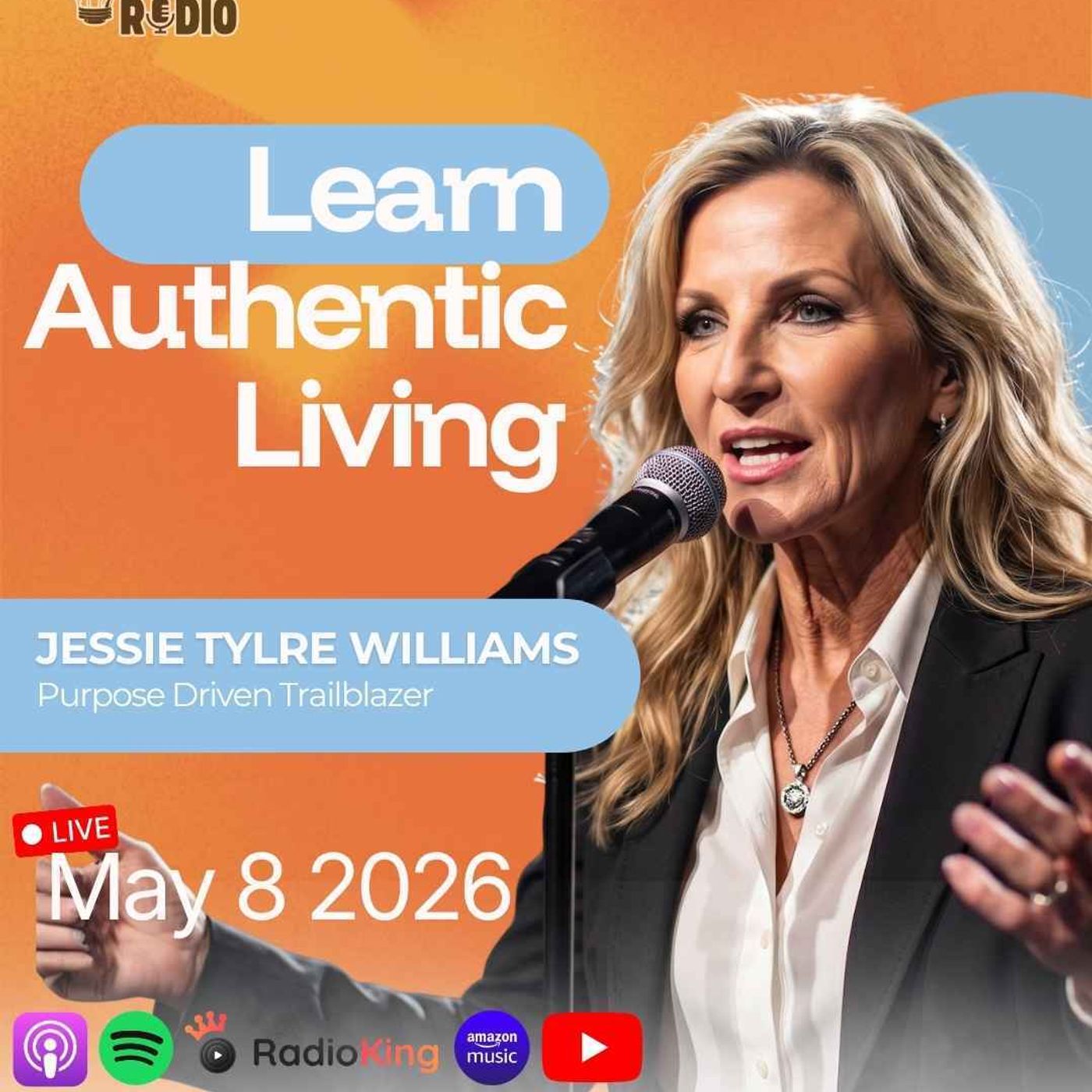
Jessie Tylre Williams on Healing and Finding Purpose | 1,497
Jessie Tylre Williams is an author, entrepreneur, musician, and philanthropist whose life and work are defined by resilience, reinvention, and impact.
With roots spanning Mexico and Canada, she has built a multi faceted career on the Riviera Nayarit, leading ventures across real estate, creative work, and philanthropy. She is the founder of Second Faze Real Estate and Property Management, as well as Planetary Persuasion, an organization dedicated to meaningful social impact.
Jessie also created the National PTSD Benefit and Galas, taking her mission across Canada to raise awareness and funds for veterans and first responders living with PTSD. Her work earned her a Commendation Medal from the Minister of Veterans Affairs, one of the country’s highest civilian honors.
An award winning musician and co author of the number one bestselling book Transforming Pain Into Purpose, Jessie brings a voice that is direct, lived, and unapologetically real. With 17 years of sobriety, she speaks from experience, not distance, sharing what it means to rebuild and rise again.
Her debut memoir, Rising Above Hell, set for release in 2026 in both English and Spanish, captures a life shaped by survival and driven by purpose.
━━━━━━━━━━━━━━━━━━━━━━━
🎧 Love our show? Show some love!
👉 Check out today’s guest: www.jessie-williams.com
🎬 Need stunning videos, clean audio, or scroll-stopping designs? Check out our media services at https://www.kmmedia.pro/ — Top-tier quality without the agency price tag. Perfect for creators, coaches, and brands ready to level up.
👍 Like this video
💬 Drop a comment & share your favorite part
🔔 Subscribe for more inspiring conversations Monday to Friday!
#PositiveTalkRadio #Inspiration #Podcast
━━━━━━━━━━━━━━━━━━━━━━━


Jessie Tylre Williams is an author, entrepreneur, musician, and philanthropist whose life and work are defined by resilience, reinvention, and impact.
With roots spanning Mexico and Canada, she has built a multi faceted career on the Riviera Nayarit, leading ventures across real estate, creative work, and philanthropy. She is the founder of Second Faze Real Estate and Property Management, as well as Planetary Persuasion, an organization dedicated to meaningful social impact.
Jessie also created the National PTSD Benefit and Galas, taking her mission across Canada to raise awareness and funds for veterans and first responders living with PTSD. Her work earned her a Commendation Medal from the Minister of Veterans Affairs, one of the country’s highest civilian honors.
An award winning musician and co author of the number one bestselling book Transforming Pain Into Purpose, Jessie brings a voice that is direct, lived, and unapologetically real. With 17 years of sobriety, she speaks from experience, not distance, sharing what it means to rebuild and rise again.
Her debut memoir, Rising Above Hell, set for release in 2026 in both English and Spanish, captures a life shaped by survival and driven by purpose.
Hosted by Simplecast, an AdsWizz company. See pcm.adswizz.com for information about our collection and use of personal data for advertising.
Grainger Voice (0:00): When you manage procurement for multiple facilities, every order matters. But when it's for a hospital system, they matter even more. Grainger gets it and knows there's no time for managing multiple suppliers and no room for shipping delays. That's why Grainger offers millions products and fast, dependable delivery so you can keep your facility stocked, safe, and running smoothly. Call 1800, click granger.com, or just stop by.
Grainger Voice (0:25): Grainger, for the ones who get it done.
Unknown Speaker (0:30): Thank you.
Unknown Speaker (0:30): Good.
Kevin (0:31): And welcome to the show, everybody. My name is Kevin and Rochelle is right there, and we've got a really good guest for you today. Not that we don't ever have a because we always have really good guests, but this is special. She is a singer songwriter. She is an author, an award winning author, I might add.
Kevin (0:51): And she also works to to help veterans and first responders with PTSD. And so she's a woman of talent and also of conviction. So we're gonna bring her we're gonna bring Jesse Tyler Williams in in just a second. And, Michelle, what's your website?
Rochelle (1:12): Yes. Please everybody visit jesse-williams.com. That's Jesse ending in I e. And they said women like her don't survive, and we're gonna find out how and why she did. So stay with us everybody as we bring Jesse in with us.
Unknown Speaker (1:29): There's a moment in every life when you decide to rise.
Unknown Speaker (1:33): To stand taller than your fear.
Unknown Speaker (1:36): To speak louder than your doubt.
Unknown Speaker (1:38): To chase the vision that sets your soul on fire.
Kevin (1:42): This is that moment. And here, we walk it together with stories that awaken, voices that inspire
Unknown Speaker (1:49): And truth that set you free.
Kevin (1:52): This is Positive Talk Radio with Kevin
Unknown Speaker (1:55): And with Brichelle.
Kevin (1:56): Where hope has a voice And that voice Is yours. Welcome to the show, everybody. We've got a great I already said that. I know. But but we do.
Kevin (2:09): And Jesse Tyler Williams is with us. And, again, go to our website, Rochelle, which is
Rochelle (2:16): Jesse dash Williams dot com. And make sure you're spelling this correctly, people, because she's a woman. Jesse Tyler is spelled t y l r e. She's gonna tell us how that all came along. But thank you so much, Jesse, for being in our world.
Rochelle (2:30): How are you doing today?
Unknown Speaker (2:32): I'm doing great. And first of all, thank you both, Michelle and Kevin, for having me on your show today. I really appreciate it. And I think we're gonna have a lot of fun today and a lot of interesting conversations. For sure.
Kevin (2:44): Oh, we really are. Because you are an author. You've got your your biography just came out last month and late last month, and we're excited for you because it's gonna be a big deal, I think.
Jesse Tyler Williams (2:59): Yeah. My memoir is it came out on April 26. It's available on Amazon, and it's it's definitely not an easy read, not a comfortable read for a lot of people, but it's honest. It's raw, and it's kind of the way I live my life. I'm pretty direct and forward, and I tell it like it is, and that's just me in a nutshell.
Kevin (3:25): We all have experienced trauma in our lives, some more than others. Everybody considers their own personal trauma to be a big deal, but yours actually is a big deal. And would you like to go over a little bit of that? I don't wanna steal the thunder from the book because I want people to go buy it, but just kinda give us a thumbnail sketch of your journey through life.
Jesse Tyler Williams (3:48): Well, basically, I mean, I've been writing this book for most of my life. I I've been writing for as long as I can remember. So I've got journals and journals and journals and scribblers and pieces of napkins and papers. A typical writer's story. Right?
Jesse Tyler Williams (4:07): And so a few years ago, I decided, you know what? I think I need to write a book. And the biggest eye opener for that was when I launched the National PTSD Benefit Gala for veterans and first responders. What I seen standing before me with these men and women that not only served our countries but many who sacrificed a lot to do that and the vulnerability that they showed and the honesty and the openness it gave me the opportunity to not only do my work on a bigger scale, but it provided a place for me to start becoming vulnerable. And that didn't happen overnight, and I'm still working on that vulnerability.
Jesse Tyler Williams (5:08): But for me, the the vulnerability was important because when you become vulnerable with somebody else, it gives them the space, the trust, and possibly the confidence to start opening up and becoming vulnerable themselves. So the book was important to me, not just to write as as an author, but at the end of each chapter, because of the variations of trauma, abuse, and addiction that I talk about in my book, each chapter at the end of it has reflection, and it has an area for a work like, it's a workbook where people can write their own story. They can talk about their own trauma and find ways to work through that. There's step by step instructions. There's places for people to write based on the information in the book, and it makes it about them because that's what I wanted it to be.
Jesse Tyler Williams (6:11): I wanted it to be a healing platform. Like, here, I'm gonna share a lot of my stuff with you, but I'm sharing it with you to give you an opportunity to open up and start healing some of those deep, deep wounds. For me, they were really deep and embedded in me so deeply that, you know, some of them I still, know, but the bottom line is is that healing process, it's a forever thing. It's not something that you can just say, oh, I talked about my trauma and I did this and I haven't done this for this many years. I'm good because that's usually when people go and they crash.
Jesse Tyler Williams (6:54): And each time anybody that's been in addiction and any each time you crash, you crash harder, you go stronger, you become weaker, and it's just a vicious battle. So the more times you fall, the harder it is to get up. And and but I always tell everybody, it doesn't matter how many times you fall. The only thing that matters is how many times you get back up again. And,
Unknown Speaker (7:21): Jesse, they said
Jesse Tyler Williams (7:21): that women like you don't survive. Why? Well, there's such a stigma around women. I mean, starting from childhood sexual abuse, you kinda carry that with you. Like, oh, you know, shut your mouth.
Jesse Tyler Williams (7:41): Be quiet. Don't be so stupid. You know? You asked for it. Why were you wearing those shorts?
Jesse Tyler Williams (7:48): And, you know, why were you wearing that shirt like that or whatever? You were asking for it. You know? You shouldn't have been there. You know?
Jesse Tyler Williams (7:56): All these things that follow us. And so so I think that when you're dealing with that kind of abuse and trauma, you don't only create walls and survival mechanisms within yourself, you tend to carry loads of guilt and shame and I'm not good enough. So for me, it was, for example, when I was in a relationship, I was like, oh, well, this guy's only slapping me a little bit. You know? That's not bad.
Jesse Tyler Williams (8:39): Better than the last guy. You know? So you you start to think that certain things are okay, and you start to create this kind of this place in your mind. And again, it's to protect yourself. In survival mode constantly.
Jesse Tyler Williams (8:58): And so, oh, no. No. No. He's a good guy. All he did was slap me upside the head, you know, once or twice.
Jesse Tyler Williams (9:04): You know? Whereas if somebody ever did that to me now, I mean, god have mercy on his soul because that's not wind up unconscious. I hope that I never get put in that position, but you see how as you heal and what you're willing to tolerate is based on your conditioning, based on your environment, of course, and based on the progress you've made in your own life, not just physically, financially, or any of those things, but really mentally and and what you're willing to accept and what you're willing to not accept at all in your life.
Rochelle (9:48): Yeah. It's kinda like showing and telling people and yourself how you truly feel about yourself. And, Kevin, we spend a lot of time talking about that voice in our head. It's important, isn't it? Did you realize, Kevin, in your life that you had shut that voice down just a little bit at a time?
Kevin (10:05): Wow, that voice, when you start thinking in a certain positive way, that voice tends to diminish over time because it it no longer has roots within you that it can take hold, it can take over you. And so you you end up not even listening to that little voice that is negative because it doesn't concern you anymore because you're living a positive life. I need to say this from the very get go, Jesse, and that is this. A lot of women have suffered trauma. I have talked with with thousands of women, and I have yet to have anyone say, nope, everything was perfect, and everybody treated me with respect, and everything was right.
Kevin (10:57): And we always talk about the trauma that women experience, but I want to say this to the men out there. If you are someone who has an eye for a child, or if you are somebody who thinks that slapping somebody is okay, I want to tell you right now it's not. You need to get the help that you need so that you can actually be a decent human being. Slapping somebody is not appropriate. Having eyes for a child is not appropriate.
Kevin (11:29): Doing something that you would not want done to you and you're doing it to them, that's more than not appropriate. So please get the help that you need so that you can actually be a human being and a member of our society. Jessy, do you agree with that?
Jesse Tyler Williams (11:45): Absolutely and that's it and the other thing or why you're speaking of men particularly in this realm the men out there too that it's a lot harder for men. And I've talked to several men throughout my life that have dealt with childhood sexual trauma as well. For them, for most of them, and I'm gonna say a majority of them, because I've spoken to quite a few, It is really hard for them to talk about that because there's so many stigmas that are attached themselves when men get sexually abused, especially as children, because they all of a sudden think that I better not say anything. They're gonna think I'm gay. They're gonna think I'm not much of a man.
Jesse Tyler Williams (12:38): And so all these things start controlling, again, the mindset. Right, Kevin? It's you have to change your whole mindset literally. And I couldn't agree with you more, Kevin and Rochelle, about that whole positive talk radio. I mean, we're here to try and plant those seeds wherever we can.
Jesse Tyler Williams (13:01): And I firmly believe that with planting enough seeds across the globe, I think that we can make a beautiful large garden grow and keep that. And I want the men to know out there that they're no different than us and that they can reach out, and it doesn't make them any of those things they've been conditioned to believe that it's they're still a human being. They're still a man, and they're still whatever they want to be and what they choose to be no matter what has happened to them.
Rochelle (13:32): And thank you for saying that. We have something we call points to ponder about planting seeds. And I just want to say as well to get it out there through the entirety of this show. If you are somebody who's in a bad situation, no matter who you are or who you think you're not, you're worth it and somebody wants to be there to help you in any way, shape, and form. 988 is a national hotline number you can call when you are in a distressed situation and you do not know that there is a way out.
Rochelle (14:01): Make sure that you are calling them. For anybody who has served in our military and is a veteran, dial the number the number 1, and they will be able to help get in touch with you and get you the need and the resource that you may think is not available for you at that moment. Kevin, would you like to expand on that at all?
Kevin (14:19): I well, I would only like to say, Jesse, that sometimes because we consider ourselves vulnerable and open, things come out on the air that I had no idea about. And and Rochelle told me that at one point in time, she was distressed and she called 988 and they were able to help her because vulnerability is key and you mentioned it several times before. She mentioned about points to ponder. We have one about the courage of vulnerability. I'd love to play it.
Unknown Speaker (14:55): May I?
Unknown Speaker (14:55): Absolutely.
Kevin (14:57): We often think of courage as a shield, a thick wall to prove that we are untouchable. We believe that to be strong is to be invulnerable, hiding our doubts and our soft edges behind a mask of certainty. But true courage isn't found in the armor. It's found in the willingness to take it off. Vulnerability is the act of showing up and being seen exactly as you are even when you cannot control the outcome.
Kevin (15:23): It's the bravery to say, I'm hurting. I don't know, or I need help. When we hide our struggles, we also hide our humanity. It's only when we are vulnerable can we truly connect, truly learn, and truly heal. Armor can protect you, but only vulnerability can transform you.
Unknown Speaker (15:46): And welcome back to Positive Talk. My name is Kevin, and Bricella's right there. And Jesse Tyler Williams is our guest. And what did you think of that piece, Jesse?
Jesse Tyler Williams (15:55): I loved it. And, you know, it it really hit home with me is the whole portraying the mask. I talk about this in my book, all these masks that I had to wear throughout my life. And instead of becoming vulnerable, I decided to put up these shields and my dukes and this callous this layer of of protection shield. And so instead of a lot of people become introverted, and they become really quiet and withdrawn.
Jesse Tyler Williams (16:31): I was the complete opposite. I was loud, obnoxious in your face, and I wanted to be heard like somebody pay attention to me. And you too, you got it. You know what
Unknown Speaker (16:42): I'm talking about. Yes.
Jesse Tyler Williams (16:44): So and then there was times when I did when I lost all hope, I went the opposite. I didn't wanna see anybody. I didn't wanna talk to anybody, and that was when I got almost to the end of my line. And that was when I knew and, you know, I wanted a way out more than once.
Rochelle (17:09): Yeah. But you also knew that there was life here that was worth living in that moment, didn't you?
Jesse Tyler Williams (17:15): No. I didn't. Because it wasn't like that for me. There was there was for me I'm gonna put this in a way. It may not make sense, but it makes sense to me.
Unknown Speaker (17:27): Yeah.
Unknown Speaker (17:27): Go ahead.
Jesse Tyler Williams (17:28): I wanted I wanted to so much I didn't wanna be alive, but I really wanted to live. Yes. I understand. I dreaded the thought of being alive. And I would get into fights with god and the devil and this whatever was out there listening to me.
Jesse Tyler Williams (17:49): And I would be like, why? Why am I still here? I should have been dead, like, 20 times over already. Why are you keeping me around? For what?
Jesse Tyler Williams (17:57): And so now, now I'm really glad that didn't work out for me. But now it is my responsibility to make sure that I use my experience, my story, my trauma, and I transform all of that into a medium that's gonna branch out and help others heal, and it's my responsibility.
Rochelle (18:25): So is that what gave you that that was like, this is what I'm gonna live for?
Jesse Tyler Williams (18:31): No. Because this didn't come till later.
Unknown Speaker (18:33): Got it.
Jesse Tyler Williams (18:34): Okay. Didn't come till later. When I when I decided to get get clean, it was if I'm a 100% honest, I thought getting clean was gonna kill me. Yeah. Because I went to the doctor, and I said, listen, doc.
Jesse Tyler Williams (18:52): Like, I I can't do this anymore, and it's not working for me to end my life. And so what's gonna happen when I quit? He goes, well, he goes, we can get get you on methadone or Suboxone or any of this. And don't get me wrong. There's a lot of people out there that use mat and use other sources to get themselves clean.
Jesse Tyler Williams (19:15): And if they're still here today, it's great that they're on this program. But for me, it was so important because we used to get all this shit and then do that and get high while doing that. So Mhmm. For me, it was everything had to stop. And the doctor told me, he goes, with your number of years that you've been using and the drugs that you've been using for such an extended period of time, he says two things are gonna happen.
Jesse Tyler Williams (19:50): He says you're either gonna go back to using or you're not gonna be able to handle the withdrawals, and you could possibly die because your body will go into shock. And he explained everything to me medically, and I don't remember all the medical terms he used right now. So he says, so I think it's in your best interest to try. And he was even starting to write on his little pad. And and I looked up at him, and I said, you know what, doc?
Jesse Tyler Williams (20:20): No. And I got up out of my chair, and I said, I guess I'm gonna die trying. And so for me, it was almost like subconsciously thinking this is my way out. My way out is to try to quit, go into withdrawal shock, and die.
Unknown Speaker (20:41): So so then everybody you could tell everybody, well, I tried, and I died trying. And
Unknown Speaker (20:47): that Right?
Kevin (20:48): That that was what was going on through your through your mind. And but but you know what? Thank god you survived. And because your mission was not that. Your mission is this.
Rochelle (21:03): You're shocking? You were like, wait. I'm still alive?
Jesse Tyler Williams (21:08): Oh, no. It was it was the worst. I wanted to die during that. I mean, it was literally the worst hell. And I talk about it in in great detail in the book about what I went through in those withdrawal days, and I'm not gonna describe it now.
Jesse Tyler Williams (21:30): It is. It may send triggers out for people, which I just wanna add. You know, sometimes there's things that we talk about or when you guys ask me questions that may come up that may send triggers to anyone out there listening right now. I just wanna make sure that everybody always maintains a safety circle and make sure that if all of a sudden there's things that we talk about that start triggering people, that they reach out for help or call somebody that they know to keep them in
Rochelle (21:58): a safe place. Well, and, Kevin, you made sure that we were gonna talk about this book. So, Jesse, please do tell us what the book is called and where we can find it.
Jesse Tyler Williams (22:07): The book is called rising above hell, and you can find it on Amazon. It's on paperback. It's hardcover, and it's on Kindle. It's also in Spanish, and it's called, and it's available in Spanish and English, and it's on
Unknown Speaker (22:27): Amazon. Beautiful. Congratulations.
Kevin (22:30): Thank you. And congratulations on your place that you're living. You you were in Canada, and now you're in a beautiful town in Mexico that I cannot pronounce.
Unknown Speaker (22:42): Yeah. I
Unknown Speaker (22:46): haven't got a prayer of being able to pronounce that. Rochelle, can you?
Rochelle (22:49): Yes. Nayari, I I know that place because it's a shoreline that they fish lots, and, of course, it's on the beach. So how could I not know there? Me and Jesse already know. We'll get together and we'll be doing something out there in the future.
Rochelle (23:03): But Jesse, when did you find to incorporate the music? Because music has been a big part of your life, and you've used that to maybe create, like, some sort of a launch pad with it. Tell us about your music.
Jesse Tyler Williams (23:18): Well, music is something that I've done since I was really young. I've been writing since I was, like, eight or nine years old. And so I didn't start singing professionally till I was in my kind of early to mid twenties. Okay. And so, I mean, I've I've toured a lot and did the whole road dog thing, and, you know, I did that for a number of years.
Jesse Tyler Williams (23:43): And then I got to a point in my addiction again that it just wasn't possible and you know you know how that it's the same story for all of us. Right? I'm more nuisance than anything. And so I put that away for a while, but, I mean, it's always been something that's been in my life. It's embedded in my soul.
Jesse Tyler Williams (24:08): It runs through my veins. It's something that it has been my my personal refuge my entire existence. My personal therapist, really. My writing, that's exactly what it is to me. I tried rehab therapies, counselors, psychiatrists, psychologists, and all this, and just none of them got me.
Jesse Tyler Williams (24:30): None of them you know, they they always started off by saying you know, it it's all kind of the same process they use. Right? And they would start off by saying, okay. We're gonna start with the timeline. And so I would get to about, like, you know, 10, 11 years old, and they'd be like like, you know, their jaw drop, and they're like, oh, we yeah.
Unknown Speaker (24:53): Like, you know, one of those. Right? And I'm like, I haven't even got started yet.
Unknown Speaker (24:58): Like That's the easy stuff. I've been telling you guys
Unknown Speaker (25:03): the good part. Wait till
Unknown Speaker (25:04): you hear that. I understand.
Jesse Tyler Williams (25:07): And so and so it was almost, I always felt like I was even too much for them. Like they didn't know how to handle understand that they're they're trained and they go to school, they read out of books, they do studies and I think all of that stuff is great and I think it's fabulous and it has its place but for a lot of us out there we need we need because we've been so isolated even though being around tons of people and so feeling so alone like nobody gets us. Once you once you get that connection where somebody gets you and understands it or has been through it, that's when you can start. Because now you're not feeling alone anymore. And that's what I really, really want people to know is they are not alone.
Jesse Tyler Williams (26:09): You are not too much, and you are enough all at the same time. And so I think that's gonna be the big connection for a lot of people when they pick up that book.
Kevin (26:25): Because they're not alone. And you know really ultimately we are never alone. Even when we are alone we're not alone. Because we've got a we've got a greater power that can that is working with us and and is designed to take care of us and stuff and and you know, but that's the thing is that we have a lot of trauma. You've had more than most.
Kevin (26:49): Now that you are through it, you've been you've been clean and sober for I I think I read seventeen years. Is that right?
Unknown Speaker (26:55): Just a little over seventeen years. Yeah. February.
Unknown Speaker (26:58): Congratulations by the way.
Unknown Speaker (27:00): Thank you.
Kevin (27:02): That's a really big deal because you are a very pretty woman and you've got a lot of energy and you're all you're so stop. You you are too. And you're you're
Unknown Speaker (27:12): You get her, Kevin. Don't come off. Oh, stop, Kevin.
Kevin (27:19): Don't you give me that face of no. I'm not. Of course, you are. Yeah. And and the thing, you now are in a position to where you're going to help a ton of a ton of people.
Kevin (27:31): I need to play this for you real quick. It's called the seed. And is that appropriate, Rochelle?
Rochelle (27:38): It's perfect. Jesse, when we are on the other side of this, let us know what you think.
Unknown Speaker (27:44): Here's another point to ponder by Positive Talk Radio. A tiny seed was buried in the dirt, covered in darkness, forgotten by the world. But within that darkness, it grew roots, then sprouted into something beautiful. The seasons of struggle you face are not endings. They're beginnings.
Unknown Speaker (28:07): Trust that growth is happening even when you cannot see it. You're listening to Positive Talk Radio where stories of hope live. And what did you think of that piece?
Unknown Speaker (28:21): Oh my god. You guys are, like, picking shit out of my brain or what?
Unknown Speaker (28:25): Yeah. Actually that shit because it came out of our brain.
Jesse Tyler Williams (28:31): And I talk about that all the time, especially when I'm speaking to families that have come to me that have somebody that's actively in addiction. And I talk to them in a way where I explain to them, they may not hear you right now, and they may not seem like they're listening, but you are planting seeds. So every seed that you drop that gives them a shimmer of hope. Each seed that you drop of confidence and reassurance. Those seeds have no other option but to grow.
Jesse Tyler Williams (29:12): And I believe with every ounce in my body and I'm living proof of it. That when you plant these seeds, sometimes you're not in a position to nurture them. But those seeds, they may not be growing as fast as you'd like them to, but they are still growing. And those seeds, they will continue to grow. And I like that part when you say in that in that little clip there where you may not always see it.
Jesse Tyler Williams (29:39): Right? But that's usually the time when that when the beautiful flower that emerges from it or plant that emerges from that seed, I kind of look at it like when you can't see those parts, it is because that seed is fastening its root because it's going to have to have extremely strong roots to be able to hold up something as powerful as you.
Unknown Speaker (30:12): Boy, I guess we did kind of pick your brain a little bit, didn't we?
Unknown Speaker (30:16): Oh, yeah. That nailed me. Yeah. I love it.
Kevin (30:20): Well, and the interesting thing, Jesse, is that we've got about 25 of these points to ponder and and you've hit on so far about 14 or 15 of them, which is which is higher than than most and we will play some of them a a little bit later, but I just wanna tell you how how happy I am for you to become have become to get through the wars, to rise above hell, and to get to where you are today because it is you are you're one of those who's making a difference in the world. Do you realize that? Right?
Unknown Speaker (30:58): I'm one of what?
Unknown Speaker (31:00): Those Mhmm. You're one of us.
Unknown Speaker (31:06): And and when I use that
Unknown Speaker (31:08): you guys. I'm good.
Unknown Speaker (31:10): On the understanding train. Okay.
Kevin (31:12): When I use that expression, what I mean by that is that you're one of those people who has been through it, has the experience, and now can, because of the experiences that you've had, you can utilize that to help somebody who's seventeen or eighteen or nineteen years behind you and is in the throes of it to maybe give them the courage and the faith and the ability to get through it so that they can then live their life to its fullest the way it was meant to be. It wasn't meant to live in a chemical induced coma all the time.
Jesse Tyler Williams (31:56): No. I think one of the most important things is that people talk so much about when you're in active addiction, when you first start getting clean, and then like me, over seventeen years, and I'm over here. Nobody talks really about the stuff in the middle, the messy, the shitty, the the the the part where you just wanna throw in the towel or you contemplate doing other things, and you don't know if you're doing the right thing. And, like, all that stuff in between. Right?
Jesse Tyler Williams (32:32): And what it takes to maintain that. What it takes to get to the one year. What it takes to get to the five years and so on and so forth. And I don't wanna set anybody up for false expectations. You know what?
Jesse Tyler Williams (32:49): You're gonna be five years clean, and I've been there. You know? And where something happens either very tragic or something happens that's very demeaning and sets you back twenty years, Sometimes things can happen, but it is so important that you allow yourself okay. So we're so busy being in this survival mode. So when something like that happens, we instantly pull out the bows and the guns and and we're in survivor mode again.
Jesse Tyler Williams (33:27): Yeah. But it is so important to understand, get to the point of learning to understand yourself. And when those things happen, you have to arm yourself and you have to allow yourself to feel those shitty feelings. And to it's okay to feel like throat punching somebody. Just, you know, please don't do it.
Jesse Tyler Williams (33:57): But it's okay. It's, yeah, it's okay. You know? And and the thing is we start feeling and beating ourself up and feeling guilty, and and all these things go rushing through our brain that can put us in a spiral and boom. And then that's when people relapse.
Jesse Tyler Williams (34:14): And so you have to make sure that you are allowing yourself and giving yourself the space to feel all of these things without thinking it's not okay. Like the saying is, it's okay to be not okay. Right? It really is. And we are human beings and we screw up.
Jesse Tyler Williams (34:39): We screw up at work or we screw up or whatever. And I tell people, if you do fall off the wagon, who gives a shit? You're still alive here right now. Who cares? Try again and keep trying.
Jesse Tyler Williams (34:53): You'll get your seventeen years. You'll get your five years. Get your one day. Just get your one day right now. That's it.
Unknown Speaker (35:01): And each day, you get one day.
Kevin (35:03): And, again, you have now it's, like, up to nineteen.
Unknown Speaker (35:07): Or I know. I'm like, we might cover all of them. I
Kevin (35:13): have to I have to play this because I believe that it all start you know what I'm gonna play, don't you, Michelle?
Unknown Speaker (35:19): I do. I do. Please. I can't wait. Please do.
Kevin (35:23): It all starts with yourself. Here's another point to ponder by Positive Talk Radio. A woman spent years hating the reflection in her mirror. One day, she whispered, I am enough. Day by day, her reflection became her friend.
Unknown Speaker (35:41): Self love begins with the words you tell yourself. Speak gently because you are listening. This is brought to you by Positive Talk Radio where stories of hope come alive. I gotta tell you around here, Jesse. We believe that self love is where it all begins because if you don't love yourself, you it's really hard to love somebody else with your whole body, soul, and mind.
Kevin (36:07): So what'd you think of that piece?
Jesse Tyler Williams (36:09): I loved it, and I actually had to do all of that, like, in-depth. Like, I I did not see in the mirror what other people told me they saw. I I didn't even see remotely. The image that I saw looking back at me was horrifying, and and you catch yourself hating that person that you're looking at in the mirror. And I used to do and this is gonna sound really silly to a but not to you guys probably because you guys probably did this or do it still.
Jesse Tyler Williams (36:48): But a lot of people might think it's silly because when you say it and do it, it it feels awkward because but I'm gonna do a little thing right now, and I hope everybody out there listening right now does this with me. Okay? I just want you to look straight ahead and just like this. Now do this. Now doesn't that just automatically change the energy?
Unknown Speaker (37:20): Yes.
Unknown Speaker (37:21): Yes.
Unknown Speaker (37:21): And so I used to do that. I used to go in the mirror, and I would be like, hey. How are you doing? And how stupid does that sound? Right?
Unknown Speaker (37:30): No. I've done it. It is. It makes you question everything, Jesse.
Kevin (37:38): I know. Because when we first met, Brichelle was not the same woman that she is today. And I said, when you look in the mirror, what do you see? And she she gave me that face.
Rochelle (37:52): Why do I look what what I don't need to spend time in the mirror. There's rocks outside. Yeah. That would have been that seriously would have been my answer, Jesse. Because I saw my here's the thing is that when I had to look into the mirror, it it was different.
Rochelle (38:06): Right? I'm not seeing the clothes. I'm not seeing my eyelashes. I'm not all the other I saw me, like, eyeball me, hey, through your eyes. Every single emotion came back through me.
Rochelle (38:15): I didn't know if I was gonna cry. I didn't know if I was gonna laugh. I kind of wanted to, like, break the mirror. I I every emotion possible went through me. I was confused because I had never seen myself like that.
Rochelle (38:26): I saw my life as somebody else's. And I have wanted to bring this up because I have to know what it is like for you. So many of us that have go through these maybe more extreme things a little more often than others, we do feel alone and it is so much more challenging, not impossible, but yes, it is more challenging to dive down and pull that little girl or that little boy out and say, this is who you are and to really believe the value and the worthy and the love in that. If you've been able to find that in yourself, Jesse, what is it like to help other people when they don't even believe it themselves?
Jesse Tyler Williams (39:06): Well, that's that's a huge topic that you bring up, Rochelle, is because especially when the trauma in your life starts from such a young age, for example, I don't ever want to make this book about blaming anybody for anything or hating anybody for what's happened to me or anything like that. And it's taken me a long time to be able to talk about it and in that way, already forgiving them and already understanding not understanding what happened to me because I don't never understand, and that's okay. But one of the biggest things that I teach and especially women is that you start by for example, I tried to get a picture of me as close to the youngest memory I had of of the abuse. So I would take that picture, and I would put it on my nightstand. And then in the morning, I would put it in the dining room.
Jesse Tyler Williams (40:22): And I would actually have conversations with that little girl and tell her how much she was loved and that it had nothing to do with her, and it wasn't her fault.
Rochelle (40:50): This is little Brichelle.
Unknown Speaker (40:52): You know, before everything went
Rochelle (40:54): haywire and your subconscious. I learned this. Kevin had we had a guest who told me, set a picture of yourself, the youngest you can find before you remember the things that were going on, and your subconscious starts to see that. I told Kevin, for a while, it was kinda hard to pick up my phone because it would stop me dead in my tracks every time I unlocked my phone. All I needed with that was my face.
Rochelle (41:19): Kevin got to see me go through that experience. So I'm glad I'm not alone. And, Kevin, you know this isn't crazy.
Jesse Tyler Williams (41:24): Because because, Rochelle, when you're looking at that little girl and and I know for me, when I would look at that little girl, I was terrified. It was sad. Yes. Terrified. And then my heart would break.
Jesse Tyler Williams (41:39): I'm like, I'm looking at this little girl in this picture and I'm going, my god, how could somebody do that to you? Yep. You know? And so all these different things and oh my god, the meditation I had to do and oh, like, I'm telling everybody out there, like, if you think it's an easy road to get to recovery, it is not. It's dirty.
Jesse Tyler Williams (42:04): It's ugly. And I'll tell you, it is freaking messy and chaotic. But once you start overcoming some of that tragedy, that trauma, that unlove, you will start to regain your composure. You will start to learn how to love the parts of yourself that you thought weren't even, they were non existent. But I still to this day, God, I still have to work on shit.
Jesse Tyler Williams (42:39): And like, when is it ever gonna end? But it doesn't because you know what? That's who we are as human beings. It never ends. And as long as you want to keep healing and keep helping to heal others and to rise above that help, you have to keep putting in the work because we're all gonna have to really shitty days sometimes.
Jesse Tyler Williams (43:02): And it's learning how to not react. And I'm kind of Yes. I'm better than I was, but I can still be pretty reactive. And then I have to check myself, and I have to go, okay. You need to respond to this.
Jesse Tyler Williams (43:19): And I have a twenty four hour rule now as well because I used to send out emails when I would get certain emails, and I'm like, you know? So now I have a twenty four hour rule that, no. You're not responding to that. You know? So stuff that I have to do because I know I'm a hothead.
Jesse Tyler Williams (43:36): I know I can get a little erratic at times. And I I can guarantee you anybody out there that knows me right now, they're go and they're listening, they're going, yep. Mhmm. Yeah. But that's okay.
Jesse Tyler Williams (43:51): That's who I am. And you know what? I'm learning to love all of those parts of me too. There's the good, the bad, the ugly, the messy, the sad, the happy, the goofy. I'm learning to love all those parts of me.
Kevin (44:08): Know, Jesse, one of the things that we're talking about lately, which has a real impact is the act of forgiveness. What we are not saying, we are not saying that we are forgiving the perpetrator of the action that hurt us. What we are doing is we are forgiving ourselves so that we can move beyond it so that we no longer have to look at it. We don't have to be their friend either, but we don't have to look at it anymore because we are forgiving ourselves for whatever preconceived thought you may have had. The shorts were too tight, to whatever was being told to you.
Kevin (44:51): And I wanna make this one other point too. Because I've experienced this with someone very close to me recently. And that is sometimes you can have a trauma when you are a little child and it is so deep within you that you bury it deeply into your subconscious until something triggers it, and it may be years later that it gets triggered, and then it comes full force back into your face and it's like it happened yesterday. And people don't understand how that how those people at that moment need compassion, they need love, they need care, because because this to them is all brand new. Have you experienced that?
Jesse Tyler Williams (45:34): Kevin, I I have. And I was I was actually in Winnipeg, Winterpeg, and I was trying to get clean. And, you know, I was doing this karaoke gig, and I'm not a karaoke fan, but I was determined. Right? And so I took a cab and, you know, I used to always sit in the front because I throw my gear in the back seat, and I'd sit in the front, not thinking nothing nothing of it.
Jesse Tyler Williams (46:04): And at the time, this was just when first of the BlackBerrys came out. Right? So I'm going back with myself here. That's okay. Don't give a shit.
Unknown Speaker (46:13): But anyway
Unknown Speaker (46:13): I'm still alive, so it's okay. Yeah. Thank you. So
Unknown Speaker (46:18): It's okay.
Jesse Tyler Williams (46:19): And I'm, know, and writing down my my stuff for for my shows and stuff like that that I did for the karaoke thing. And and then all of a sudden, I look up, and I'm like, where the fuck are we? And he's like, no. No. No.
Jesse Tyler Williams (46:39): I'm taking you here. And I'm like, excuse me? You're you're you're doing what? And I'm and this is literally going outside of the city limits. Okay?
Jesse Tyler Williams (46:51): And he started doing things to me and blah blah blah. And I grabbed my shit and freaking opened the door, and I jumped out of the car. He was only going about 40 kilometers an hour, but you're jump out of a car at 40 kilometers an hour and tell me. Okay? And I ran and I ran and I ran and I ended up finding this Salisbury house, and I called my friend Jane.
Jesse Tyler Williams (47:17): Jane has been a lifesaver. There's two people in my life that I've known forever. Dana is number one and and Jane. And I called Jane. And and now you gotta remember by the time I walked all this way back to find this Salisbury house, we're looking I think it was, like, 03:00 in the morning by now.
Jesse Tyler Williams (47:34): Right? And so I called well, she came and picked me up right away. She said, stay there. Don't move. And so, anyhow, she brings me back to my place, and she's like, you need to call the cops, and you need to report this cab driver.
Jesse Tyler Williams (47:51): I said, no way. I said, I'm not doing that. I said, I'm not going through that again. I said, I know how this works out. I know everything that's gonna play out.
Jesse Tyler Williams (48:01): I already know what's gonna happen. I'm not doing it. Well, I was so exhausted, so she stayed with me. And I passed out. Like, I I was so tired.
Jesse Tyler Williams (48:12): I laid down, and I fell asleep. She called the cops because she was that determined to get this guy reprimanded for what he had done. Yeah. Because I didn't know what car number I was in or what the driver's name was or like, you you don't even think about that until you have to. Right?
Jesse Tyler Williams (48:32): And so, anyhow, long story short of it was that put me in such a messed up place. After she left, the first thing I did was I made a phone call, and I got some shit. And I I went off the knee bent. And there was no turning back from that until just over seventeen years ago when I and that that that one episode that took me on such a downward spiral that it was it was a brutal crash.
Rochelle (49:12): So how do you deal with it when it comes up now or when you have those things? Is it just grace and love and nothing short of that?
Jesse Tyler Williams (49:21): Yeah. Yeah. The you know what? And we live in a world where, you know, it's not just the men. It's women can be triggering too.
Jesse Tyler Williams (49:32): I mean, women can be viciously mean, and I'm all about empowering women, telling women how great they look. And, you know, I always find things in everybody that is beautiful about them. It doesn't matter who you are. You know? And so when things happen now, I'll give you an example.
Jesse Tyler Williams (50:03): This guy cornered me in an elevator and he wasn't a small guy, okay? And I kinda went into panic mode, and I didn't even realize that I didn't press the button on the elevator. And I got into the basement, and my immediate reaction at this point is I looked at him and I said, you will never effing do that to me again. I said, the next time you get that close to me, I will lay you out. And he just looked at me like this, and I said, and I mean it.
Jesse Tyler Williams (50:34): And I walked away. And I would not think twice about it now of not hiding from these monsters anymore. I will not hide, and I will be I will stick up for the underdog every time. I will defend people that do not have a voice. And is
Unknown Speaker (50:53): it
Jesse Tyler Williams (50:53): the right thing to do sometimes? Probably not. Because you know what? And I don't really give a shit. If I'm getting my message across, then it doesn't matter as long as I'm not doing anything to get me thrown in jail.
Unknown Speaker (51:05): Right. But Causing more trauma. Exactly. But Yeah.
Jesse Tyler Williams (51:09): But I think I'm in a place now where where when those things happen I mean, I got a little 11 year old girl. You know? Mhmm. So you gotta remember that you can't let your trauma dictate their lives either. You have to be really careful with that.
Jesse Tyler Williams (51:33): You know? Like, you can't so if a guy kinda looks at her or whatever, and I caught myself doing it, like, thinking in my head,
Unknown Speaker (51:41): what the fuck you You start to see me.
Jesse Tyler Williams (51:43): Yeah. What the hell are you looking at? Why are you looking at her like that? Right? Like and then I'm like, okay, Jesse.
Jesse Tyler Williams (51:48): Check yourself. It's okay. You know what? You're here you're here to protect her. Nobody's gonna touch her.
Jesse Tyler Williams (51:53): You know? So you have to not let your trauma affect the people around you because it can and it will if you don't check yourself.
Unknown Speaker (52:01): Yep. Good point.
Kevin (52:04): You know, Jesse, one of the things that that the show is based on at a very fundamental level is the fact that we need to declare our independence from certain things. And I've got a I've got a thing I would love to play for you about that, and it is fundamental to this show and everything that we believe in and everything that is right and good. And I'd love to play that for you now. May I?
Unknown Speaker (52:32): Absolutely. I'd love to.
Unknown Speaker (52:34): For way too long, we've allowed shadows to dictate our steps. Our clamor of division, the whisper of fear, and the harsh grip of hate, they've tried to define us. But this moment, this is our moment of truth. We remember who we truly are, not just separate islands, but a vast ocean of shared humanity. We declare our independence from the narratives that have pulled us apart.
Kevin (53:03): We choose curiosity over judgment, empathy over indifference, understanding over accusation. This isn't about ignoring our differences. It's about celebrating the strength woven into our tapestry. It's about remembering that progress isn't built on exclusion, but on common ground. So let the banners of kindness fly high.
Kevin (53:28): Let the anthem of unity ring out. This is our declaration, our independence from what limits us, our freedom to truly connect. Because together, we are stronger. And together, we are free. And this declaration is brought to you by Positive Talk Radio.
Unknown Speaker (53:50): And it is vital in my opinion. And, well, let me ask you. What do you think of that?
Jesse Tyler Williams (53:55): I thought that was wonderful, and I'm a firm believer in be kind because you know what? That kindness, it it's not just for them. It's for you because when you treat somebody with that kindness and understanding and but knowing, Kevin, that there's a lot of things that we don't always understand, but sometimes we just need to know that it's okay not to understand that. Let's just accept it for what it is and just be kind and move on and try to move through it. I loved it.
Kevin (54:27): Exactly. Brichelle, are you still there? Are you having Internet problems?
Rochelle (54:31): Yes. If you guys can still hear me, the screen is white, but I'm able to hear, and I don't know what anything looks like. So, you know, I'll I'm I'm here. Just know that. And, Jesse, I really just have to say thank you so much for being you, for for being authentic, and not not backing down to any excuse nor circumstance nor experience that could've, and in your eyes, should've, at certain times, taken you out to be here to tell your story, to give it back, to help other people, who felt alone.
Rochelle (55:10): I remember when I was that person, and Kevin was there for me differently than I had ever experienced before. Being that one person with that one message can seriously have an impact on somebody's entire life and their view and perspective on their value and their growth and who they are. Thank you so much for wanting to be here still, for giving out this work. And I have to say, as my cousin told me, excuse my language, but she said, bitch, you can't die. You are she told me, what is the word for people?
Rochelle (55:45): Oh, she told me, you are invincible. And, you know, I run I run with that, and I want to share that with you because I feel the same about you.
Jesse Tyler Williams (55:54): Well, thank you. And I think you are too. You have great energy, and I'm not sure what your story is, but maybe one day you can share it with me. But whatever you're doing, keep doing it because you're remarkable. And, Kevin, you too.
Jesse Tyler Williams (56:08): Like, it's been an absolute honor. I could sit and talk to you guys all night.
Kevin (56:15): Well and we we will you're gonna have to come back because we we need to there's so much she's back. Yay.
Unknown Speaker (56:25): Yay. How are you? I can see you.
Unknown Speaker (56:28): There is so much and by the way, you are one freaking brave woman.
Unknown Speaker (56:36): Yes. Thank you.
Unknown Speaker (56:39): And to add to that, probably one of the sharpest in the box. I think all of us could use you in our tool set.
Jesse Tyler Williams (56:45): I I should have severe brain damage. I don't know how I I got I got away with having a little bit of my brain left. But yeah. No. It's it's something that I feel very fortunate that I am able to still continue getting educated and learning things.
Jesse Tyler Williams (57:04): I I'll never stop learning. I'm in Cornell University right now taking some courses and stuff like that, trying to get some degrees, but I don't know. I'm just I feel truly, truly blessed that I am here. And, again, I'm gonna reiterate this. I really feel that with the gift of life, I have a responsibility to the greater masses to be that voice for them, to be that ear for them, to hear them, and they are I need them to know that we hear you.
Jesse Tyler Williams (57:44): We see you. We feel you. We know. And so just give us your hand. You know?
Jesse Tyler Williams (57:54): Yeah. And that's it. And just gotta keep believing, and don't ever give up hope. I've got a tattoo on my rib cage here in this in Latin. But in English, it means where there is life, there's hope.
Jesse Tyler Williams (58:05): And with every breath, one breath, as long as you've got one breath left, there's still hope.
Kevin (58:15): Alright. Couldn't agree more. And and and by the way and Prashell, let's go over information and the book and everything so that we can do that. And by the way, my one of my favorite sayings of all time came from a movie. And that movie was in tell me what you think about this.
Unknown Speaker (58:32): Because this this made my makes my heart sing every time I say it, which is your heart is free. Have the courage to follow it.
Rochelle (58:43): Oh, Kevin, and say your thing about the when you wake up, your life is empty and meaning.
Kevin (58:50): Alright. I can do that. One of the things that that I try and do every day is when I wake up in the morning, I remember my life is empty and meaningless. And some people will say, what the hell you mean? You've got a show and it's like, no, you don't understand.
Kevin (59:06): My life is empty until I and no one else decides what to fill it up with that day. And it's meaningless until I and nobody else assigned meaning to it. Perfect. And it's designed for my best and brightest and to be kind, doesn't cost anything to smile by the way. I know that's hard to for some people to believe but you can be kind to somebody and just smile at them.
Unknown Speaker (59:35): I drove a metro bus in Seattle for twelve years. I got to talk to some all kinds of different homeless folks and all that kind of thing. You may be the only person that talks to somebody all day, so be kind. You can do it. Yep.
Unknown Speaker (59:49): It's so Good message. Thank you, Rochelle, for making me say that.
Rochelle (59:53): Yes. Well, thank you for saying it, and thank you for teaching me too and teaching all of us as well as you continue to do every day, Jesse, through your work and your experiences. You continue to live. Please do tell us all the places we can find you, the book, and what exactly you offer for people.
Jesse Tyler Williams (1:00:16): Well, first of all, right after this show, I've got a link on the Facebook group for the positive talk radio for people for a little bit of a q and a for thirty minutes. And they can find me by Jesse Tyler Williams, t y l r e. And I'm the only one on the planet spelled with my name spelled that way. So I'm easy to find. My website is www.jesse-williams.com.
Jesse Tyler Williams (1:00:45): And I'm on TikTok, YouTube, Instagram, all all of the above except Snapchat and Tinder. Good. Well, also mention the book. Yes. Oh, the book.
Jesse Tyler Williams (1:00:59): Yes. Rising Above Hell available on Amazon, and it's available on Kindle, paperback, hardcover, both in Spanish and in English. For the Spanish version, it's called So and that's available on Amazon as well. Beautiful. Thank you, Jesse.
Unknown Speaker (1:01:23): Oh, thank you guys so much. It's been an absolute pleasure, and I look forward to part two.
Kevin (1:01:29): And there will be a part two. I'm so I I gotta I gotta tell you. I just love talking to people like you because of the good that you can do for somebody who right now may be sitting on their bed. Alone and feeling lost. And you can help them recognize that there is a way out and you can have it.
Kevin (1:01:56): All you have to do is work at it every day. And it ain't easy, and you said it, and you're right, but you can do it. And I wanna thank everybody for paying attention. Brichelle, we've had an awesome day, haven't we?
Rochelle (1:02:12): Sometimes you just can't find words when you're grateful for the little things because they excel larger than the things that you can even imagine as Jesse, you know. And Kevin, of course, thank you for believing that in yourself and creating this platform to have these days. It would not be possible without you. Thank you so much, Jesse Tyler Williams for your time, your experience, and your life that is so beautiful and so worth living. Thank you for being on the planet to help other people pass this point.
Rochelle (1:02:42): And remember people that there is somebody who loves you when you are in fear because that's the only difference that we truly have. We are stronger together as we say all around the world. Jesse, I would love to let you have the last word. Until next time, thank you for being the beautiful blossoming cherry on top of the cake that we have built up all week long.
Jesse Tyler Williams (1:03:07): I just wanna close things off by, again, thanking you both, Kevin and Michelle, so much for the opportunity here today. And to everyone out there listening, we talked about it earlier about being kind. You really might be the difference between life and death for another person and the words that you choose to say. So be careful. Choose your words wisely.
Jesse Tyler Williams (1:03:32): And for those that are out there struggling, know that there is a way no matter how lost you feel right now or how deep in the hell you that you're in or the darkness that you feel, there is hope, and you can do this. I promise you that there is a better way. Thank you. Thank you.
Kevin (1:03:58): And as my favorite band, the Beatles, once said on a simulcast of around the world, all you need is love.
Unknown Speaker (1:04:07): Amen.
Kevin (1:04:08): Thank you, everyone. Thank you for being part of Positive Talk with Kevin McDonald, where stories inspire and voices remind us of what truly matters. May today's conversation give you hope, courage, and a reason to keep moving forward. And just remember, till next time, be kind to one another because each other's all we've got.
Speaker 4 (1:04:33): From GEICO subconscious news, I'm Tammy Racing Thoughts. Tonight, you just left for work and had a nonspecific feeling that something was happening to your place and it wasn't good. Dan?
Unknown Speaker (1:04:42): Exactly, Tammy. It could be smoke damage, theft, or just too much caffeine, but you can't stop thinking about it.
Speaker 4 (1:04:48): But with renter's insurance through GEICO, your stuff is covered, so you don't have to worry.
Unknown Speaker (1:04:52): And that's great because the weekend is coming up and it's chock full of social obligations that are ready to fill that void.
Speaker 4 (1:04:58): Oh, Will they, dad? It feels good to worry less. It feels good to GEICO.

Author/CEO/Musician/Mom
Jessie Tylre Williams is an author, entrepreneur, musician, philanthropist and #1 bestselling co-author. A Mexican citizen by blood and Canadian citizen by birth, she has built a life and legacy on the Riviera Nayarit that spans multiple industries and continents.
She is the founder of Second Faze Real Estate & Property Management in Bucerías, Nayarit, the founder of Planetary Persuasion, her philanthropic organization, and the founder of the National PTSD Benefit & Galas — through which she spent a few years touring Canada coast to coast raising awareness and funds for Veterans and First Responders living with PTSD. That work earned her a Commendation Medal from the Minister of Veterans Affairs, one of the highest civilian honours in Canada.
A Nashville TCMA award-winning musician and co-author of the Amazons #1 Best Seller “Transforming Pain Into Purpose”, Jessie brings to everything she does the same unflinching authenticity that has defined her life — honest, purposeful and impossible to ignore.
With 17 years of sobriety, she speaks not from a distance about survival and recovery, but from inside it — still doing the work, still rising. Her debut memoir, Rising Above Hell — available in English and Spanish — releases April 26, 2026. Death took a shot at her twice and missed both times. The book is what she owes the world for that.
jessie-williams.com | @jessietylre | JTW Publishing