 Spotify
  Apple Podcasts
  Amazon Music
  iHeartRadio
  Podchaser
  YouTube
 Shannon Fernando-Rubera on Changing Lives Through Compassion | 1,498
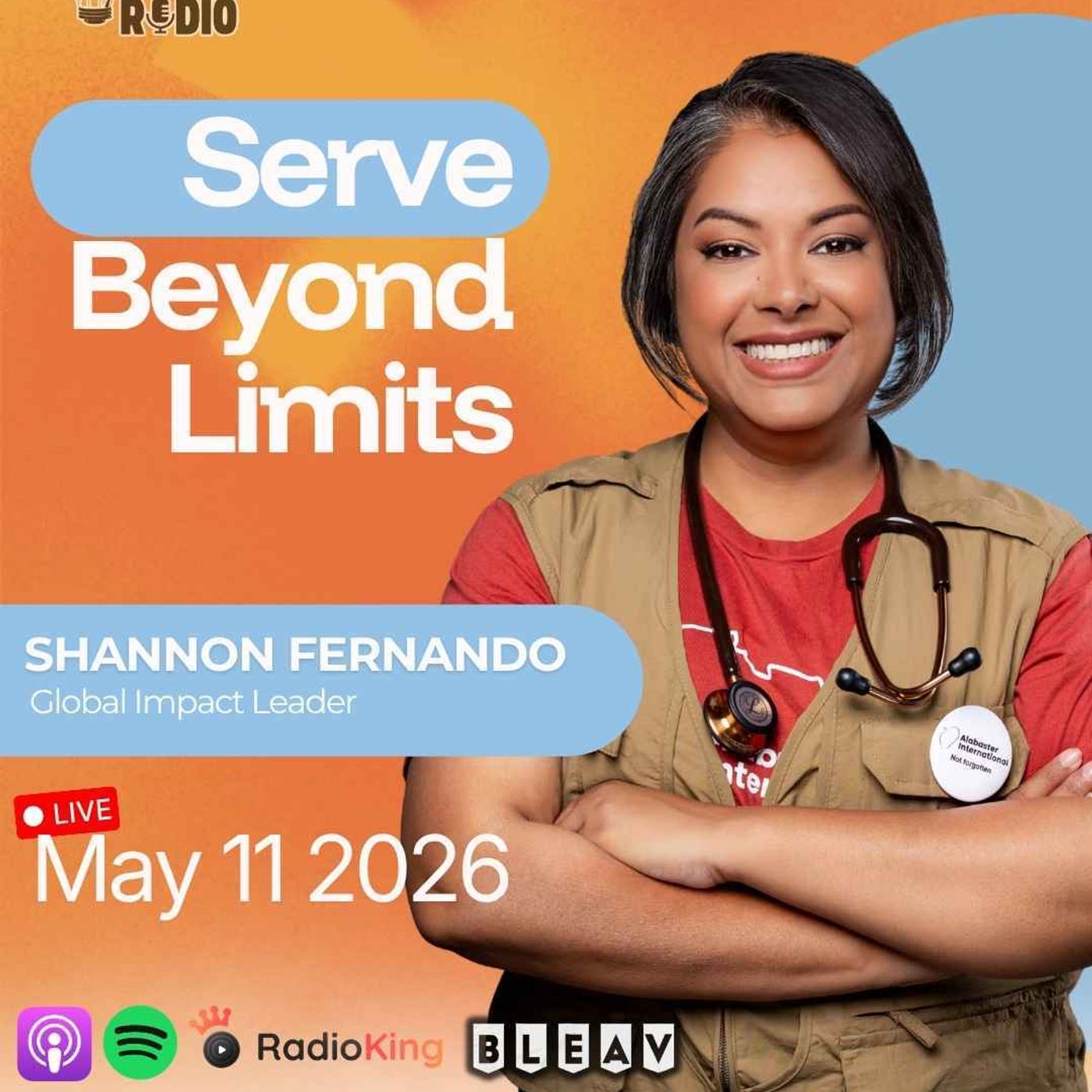
Shannon Fernando-Rubera is proof that compassion can cross borders, survive chaos, and change lives. From war-torn regions to forgotten communities, she steps into the places most people turn away from, bringing healing, hope, and humanity to those who need it most. As a Family Nurse Practitioner, TEDx speaker, and founder of a global humanitarian movement, her mission goes beyond aid. It is about restoring dignity, creating opportunity, and reminding the world that no life is invisible.
━━━━━━━━━━━━━━━━━━━━━━━
🎧 Love our show? Show some love!
👉 Check out today’s guest: www.alabasterinternational.org
🎬 Need stunning videos, clean audio, or scroll-stopping designs? Check out our media services at https://www.kmmedia.pro/ — Top-tier quality without the agency price tag. Perfect for creators, coaches, and brands ready to level up.
👍 Like this video
💬 Drop a comment & share your favorite part
🔔 Subscribe for more inspiring conversations Monday to Friday!
#PositiveTalkRadio #Inspiration #Podcast
━━━━━━━━━━━━━━━━━━━━━━━


Shannon Fernando-Rubera is proof that compassion can cross borders, survive chaos, and change lives. From war-torn regions to forgotten communities, she steps into the places most people turn away from, bringing healing, hope, and humanity to those who need it most. As a Family Nurse Practitioner, TEDx speaker, and founder of a global humanitarian movement, her mission goes beyond aid. It is about restoring dignity, creating opportunity, and reminding the world that no life is invisible.
Check out today’s guest: www.alabasterinternational.org
Hosted by Simplecast, an AdsWizz company. See pcm.adswizz.com for information about our collection and use of personal data for advertising.
Speaker 0 (0:00): I found out I was going to be a parent, I immediately felt a lot of anxiety and worry. So I went on to BetterHelp to try to look for a therapist to help me with that.
Unknown Speaker (0:08): My relationship with my family and with my boyfriend and with myself were suffering. I really needed help.
Speaker 2 (0:15): I was ruminating a lot. Really getting those thoughts out to a therapist and getting feedback was just life changing.
Unknown Speaker (0:23): Discover what BetterHelp online therapy can do for you. Visit betterhelp.com today.
Shannon Fernando (0:31): When you manage procurement for multiple facilities, every order matters. But when it's for a hospital system, they matter even more. Grainger gets it and knows there's no time for managing multiple suppliers and no room for shipping delays. That's why Grainger offers millions of products in fast, dependable delivery so you can keep your facility stocked, safe, and running smoothly. Call 1800, click grainger.com, or just stop by.
Shannon Fernando (0:56): Grainger, for the ones who get it done.
Kevin (1:02): And welcome to the show, everybody. Rochelle will be here shortly, but my name is Kevin, and this is Positive Talk Radio. And we have got an extraordinary guest today. She is a humanitarian of note. She works all over the world helping people live their lives a little bit better and we're gonna talk to her right now.
Kevin (1:23): Her name is Shannon Fernando, and her last name we'll get to in a minute. So we'll be right back. Stay with us, everybody. There's a moment in every life when you decide to rise.
Unknown Speaker (1:36): To stand taller than your fear.
Unknown Speaker (1:39): To speak louder than your doubt.
Unknown Speaker (1:41): To chase the vision that sets your soul on fire.
Unknown Speaker (1:45): This is that moment. And here, we walk it together with stories that awaken, voices that inspire
Unknown Speaker (1:52): And truth that set you free.
Unknown Speaker (1:54): This is Positive Talk Radio with Kevin And with Brichelle. Where hope has a voice. And that voice is yours. And Brichelle will be here in just a moment, but we've got great guest. Shannon, how are you?
Unknown Speaker (2:09): Hi. Thank you so much for having me, Kevin. I'm doing great.
Kevin (2:12): We're so excited to talk to you because of the work that you're doing, and I wanna get this out early and often. Have a fundraiser coming up on Friday in Southern or in Orange County, Southern California, Costa Mesa. And first of all, let's talk about you, your work with the Clinton initiative and all of the things that you are doing and living in Africa and working in Kenya and hopefully Sam Well is listening and all the things that you're doing. How did you get started being the humanitarian that you are and because you are really working hard to make it work for everybody. Talk to us about that.
Unknown Speaker (2:59): Thank you so much. Really appreciate the introduction. Really, my start came when I got rejected from medical school. So I've always wanted to be in health always wanted to be in health care since I was a child, really, and always felt drawn to communities that were considered vulnerable. And I did the whole thing.
Unknown Speaker (3:21): I went to UCLA, did biology, pre med, applied to medical school and got rejected from every single one. And that was really the crossroads for me, was I could reapply or I could actually follow my passion and figure out who I'm actually called to serve in health care. And that's when I decided with a good friend of mine to go to Kenya. This was in 2007. And we lived in Kibera, which at the time was one of the largest informal settlements in the world.
Unknown Speaker (3:57): And we lived amongst women and children and the communities on the ground, started a very small project for women living with HIV. And it was really there that I fell in love with Africa and Kenya and felt called to start Alabaster International, the NGO that I run.
Kevin (4:15): The people there are phenomenal, aren't they?
Unknown Speaker (4:19): Absolutely. Yeah.
Kevin (4:21): And they you know, they're it's so instructive because we got a lot of stuff going on and we got a lot of stuff in The United States and a lot of, you know, you go to the grocery store and and you can buy anything you want. There it just isn't that way, but they're still happy.
Unknown Speaker (4:38): Absolutely. It's it's a mindset and a posture of heart that that that is always looking at gratitude and joy in the simple things. And it's actually why I always say the communities are actually my teachers that I actually learned from them, our whole team, we learn from them each time we're together.
Kevin (4:59): It really is an interesting dynamic because they don't have anything. And as a matter of fact, Samuel, he has a program where he feeds children and every Saturday, and we'll get more into that a little bit later. But if they have the bowls that they have, So a lot of them are just plastic Tupperware and things that came from, you know, like CoolWhip and stuff like that because that's all they have. And it is the bowl that they have and they don't have anything else. And yet the kids are happy and they're laughing and talking and they're excited about having breakfast every Saturday with Samwell and his group.
Kevin (5:49): So it really is human beings, it's more of a mindset than it is anything else, isn't it?
Unknown Speaker (5:56): Absolutely. And I would venture to say that while they may not have as much as, of course, we do, and there is a lot of lack, there's actually a lot of abundance because they have one another. There's power in being in a community together. And that's what we've really seen has really changed us as well, is that we lean on one another and that we need one another just like they do.
Kevin (6:19): So in 2007, you and a friend decided you'd didn't your family and friends say you're gonna do what?
Unknown Speaker (6:28): Absolutely! I just graduated you know I had to fundraise my way to buy the ticket to Kenya and they were like just reapply to med school what's wrong with you? And I just said you know I need to do this I felt and it was a calling from God for me, my faith. And so I just felt like I needed to go out there and really figure out who I am and what I'm called to be. And it was really there that I fell in love with nursing, realized that I wanted to be proximate to communities, not just visiting, but living with and living amongst.
Unknown Speaker (7:04): And that's really been the model that we now carry into our work since then.
Kevin (7:09): It's amazing work that you're doing. And now you're not just in Kenya, you're all over Africa, aren't you?
Unknown Speaker (7:17): Yes, we are in Kenya, of course, South Sudan, Ethiopia, and recently expanded to South Asia to Sri Lanka where I'm actually originally from.
Unknown Speaker (7:25): Oh, very nice. So South Asia. And so that it is surely I can't even pronounce the name. So
Unknown Speaker (7:34): Sri Lanka.
Unknown Speaker (7:35): Sri Lanka. And now where is Sri Lanka located?
Unknown Speaker (7:39): It's off the coast of India. So it's right yeah. Right right right there in the Indian Ocean. It's a beautiful island. I was born there, but came to The United States when I was seven.
Unknown Speaker (7:49): So I've been here, you know, all of my life really. But there was a big cyclone that hit in December, actually November. And we were we basically went in to support communities on the ground, particularly with mobile healthcare and recovery services. And we were like, we need to be here long term. This can't just be a one time.
Unknown Speaker (8:13): So we made the decision to expand there in December.
Kevin (8:17): Well, and I'll tell you what that cyclone that hit, by the way, if you're in The United States, a cyclone is the same thing as a hurricane. And it was, they had a level five cyclone and it was a monster cyclone. It covered all the way from The Philippines to Japan to South China and India and all, I mean, that was just huge and they've had several of them of late. So they're getting they're getting bigger and and so was it was the damage significant where you were?
Unknown Speaker (8:53): Yes. Absolutely. Essentially, the the scope of the damage in Sri Lanka was actually two to three times that of the tsunami in 2004 because the flooding happened throughout the island, not just in coastal areas. And so when we went in, we asked our local partners who are really the heroes on the ground, the people who are there living in this all the time. We asked them to take us to the most vulnerable communities and so that's where we went and we saw that it was actually the elders in the community that were most affected, especially those who are bedridden or have decreased mobility And so that's where we focused our work.
Kevin (9:31): Oh wow. So, and because the weather was so bad, and are they, have they recovered as yet or are they still suffering?
Unknown Speaker (9:42): There's very much in the process of recovery and getting resources, but it's still, I mean it's going to be a while because every sector was impacted. So it's going to be a long journey.
Kevin (9:54): So so by the way, and I haven't mentioned well, did mention this at the very beginning, but you have been working with the Clinton Institute or the Clinton
Unknown Speaker (10:03): Clinton Global Initiative. Yeah.
Unknown Speaker (10:05): That's it. The Clinton Global Initiative. How did you get hooked up with them?
Unknown Speaker (10:09): Yes. Again, so grateful. Shout out to the whole CGI team. We got connected them in 2024 actually, and it was really centered around our food security and nutrition program centered on a crop called ENSET, E N S E T. It's related to the banana family.
Unknown Speaker (10:27): It's drought tolerant, extremely nutritious, and we were able to garner the first ever agreement between the governments of Ethiopia and Kenya, Ethiopia is where NCET is indigenous to, to share NCET to be able to use as a new food security crop in both countries. And so we got connected to the Clinton Foundation or Clinton Global Initiative around that project.
Kevin (10:51): Oh, that is really cool because they and they were able to provide you with some financing. How did how did they help you?
Unknown Speaker (11:01): Yeah. So CGI is really it's really interesting and it's really it's a really innovative model. They don't directly finance. What they do is they bring credibility and visibility to the work and then connect us with partners, funders, other resource organizations to be able to help focus and further the work.
Kevin (11:20): Well, and it's much better to have a larger organization like that, that has got the people that they have access to that you might not, as a single entity, have access to. Is that right?
Unknown Speaker (11:33): Absolutely. Again, it goes back to that partnership. We're not really meant to do this this work alone. And so having the model of partnership that CGI really brings and their convening that they do to bring people together has really been an asset for us, particularly with that program.
Kevin (11:49): So when did you decide that you were gonna start your own nonprofit organization and to make this your life's work?
Unknown Speaker (12:01): So it was really after I came back from that initial trip to Kenya where I lived there and I just felt I want to contribute in some way particularly to women, the women on the margins. I found in our ten plus, actually fourteen plus now years of work, that is really the women that are the nurturers and also the providers and really the key to progress in these communities. And again, not to say that men are not involved, but when we invest in women, we have found that their impact is far reaching. It goes from the household, then to the groups, and then to the villages and beyond. It's this exponential scale that we see an impact.
Unknown Speaker (12:42): And so I came back from that trip and decided that I wanted to start a nonprofit to support particularly women and children and all the communities connected in Kenya at first, and then it just burgeoned from there.
Kevin (12:55): You know, I told you before we began that I have a friend that is from Kenya and he was the son of the chief of a particular village. And so you would think being the son of the chief that they would have, you know, things and stuff. But he was telling me that where the village is located, the women, every day walk six miles, one way to get water for the village and then to come back. And so the women really are the backbone and at one point the men decided, well, you know, we'll go and we'll help out with the women. And the women said, no, no, that's our time.
Kevin (13:35): That's our time to talk about So we're not interested in that. It is a unique cultural difference than we have here because, and I don't know this, are women treated well in the places that you are or are there still issues with equality and and that kind of thing?
Unknown Speaker (13:59): Yeah. So it varies from village to village and region to region. But in general, I would say that women are often not the main decision makers of the household. And so they still are secondary to the decision of the men in the community. And so what we want to do is, what you're describing is this incredible resilience, right?
Unknown Speaker (14:19): Women walking six miles one way to get water for their family. And so what we want to do is capacity build and really enhance that resilience coming alongside these women co dreaming and co building with them so that we can increase their decision making power in their households. And then that becomes something that we can scale from household to household. So yes, they there's still work to do to enhance the role of women in the communities that we serve.
Kevin (14:48): Well, but there's always going to be work to do, but if you can help women, especially with women and their children and the childbearing issues that go on because it's it's the they they give birth the old fashioned way. They just give birth, don't they?
Unknown Speaker (15:05): Yes. Yeah. Some at home, and that's one of the reasons Alabaster International, one of our main focus areas is health and then nutrition, female entrepreneurship, and then education for children. And so the health care component, we focus a lot on maternal health so women can give birth safely in their community. So we built two maternity centers, one in Kenya and one in Ethiopia.
Kevin (15:28): Oh, very nice. That is awesome. And by the way, she is having a fundraiser. Tell us about that on Friday.
Unknown Speaker (15:34): Yes, so excited. So our fundraiser is called Her Light and Her Legacy. It's going to be at Deli Nerds restaurant. Shout out to Deli Nerds. They're an amazing restaurant.
Unknown Speaker (15:45): Check them out. It's in Costa Mesa from seven to 9PM. There's an Eventbrite link that you go to to RSVP. So you we can know to expect you. There'll be some champagne and light bites and a photo installation and a silent auction and just a chance to hear about the stories of the women that we have the honor of serving alongside.
Unknown Speaker (16:06): And we'd love to see you there.
Kevin (16:08): That is really cool. And by the way, one of the things that we do here, which is kind of unique and unusual, is I have something that we call points to ponder. And I would like to play one for you because this is reminds me so much of the work that you're doing and the person that you are. Can I play this real quick?
Unknown Speaker (16:26): Absolutely.
Kevin (16:27): Here's another point to ponder by Positive Talk Radio. In a dark room, a single candle was lit. That tiny flame chased away the shadows, filling the space with hope. Your courage, your kindness, and your light may seem small at times, but it can change someone's entire world. Never underestimate the power you already carry inside.
Kevin (16:52): Even the smallest flame can ignite a fire that transforms lives. You are listening to Positive Talk Radio where stories of hope come alive. And by the way, we're talking with Shannon Fernando, and your last name the other half of your last name is I forgot.
Unknown Speaker (17:09): That's okay. Rubera. That's my married name.
Kevin (17:12): Oh, very cool. What did you think of that piece?
Unknown Speaker (17:14): Oh, so beautiful and so so true. I mean, this is what we see on the ground. When you empower even just one woman, you empower the entire community, and it's so powerful. Such a good reminder.
Kevin (17:27): And when you you lead this whole group, did you think that this was going to be and I'm sure your family and friends were like, boy, did you go off the rails? We thought you were going be in health care and now you're working with a major nonprofit and you're saving lives.
Unknown Speaker (17:50): Yeah, mean, it's interesting. I think for me, it's I'm doing what I'm created to do. So it often feels like an organic natural part of me if I'm not doing this it does I don't feel myself so I don't know if I'm explaining that correctly but it just feels such an extension of who I am created to be and who I am. And also the fact that I can't ever do this alone, right? I have an entire team of amazing people, our board, our advisory board, our partners, local partners on the ground, and it takes all of us to really do this work effectively and to see lives changed.
Kevin (18:30): It takes a village but it has to start with some place and it started with you. That must make you feel very proud.
Unknown Speaker (18:38): I'm deeply honored to be able to do the work. Yes, absolutely.
Kevin (18:42): And it's going to continue to grow and grow and grow. That's and do you have you do you have a like a five year, ten year, twenty year long term plan of what you intend to do?
Unknown Speaker (18:56): Yes. I mean, one big thing that we're really working on right now as an organization is to see hunger in Africa eliminated. And that's a huge ambitious goal. And we have one piece of the puzzle to that. And we want to really ensure that that piece of the puzzle is known and scaled throughout Africa.
Unknown Speaker (19:15): And that goes back to our NSEP program that I mentioned earlier, because it is such a prolific crop and set to be drought tolerant. And we've proven that it can be grown in multiple nations now. We are wanting to see more and more farmers, particularly female farmers, access NCET and grow it as food. And so that is one big thing we want to see as we continue this work is to see NCET scaled and other indigenous crops like NSAID that may not be as well known scaled throughout these countries. So people can grow their own food.
Unknown Speaker (19:47): We will reduce dependency on external aid and ultimately communities thrive without actually needing us long term. That's really the vision.
Kevin (19:58): Well, and if you what what is that old saying? You you can give somebody a fish or you can teach them how to fish, and then they never run out of fish.
Unknown Speaker (20:08): Exactly.
Kevin (20:10): Which is a really big deal. I have to ask you though because you would know more than the typical person here in The United States. A year ago, we took some actions that affected Africa in a very big way. Have those things that we did, like USA did would be one of them and discontinuing some of the things, and also the AIDS prevention things that George W. Bush put into action, and then that was also curtailed a little bit.
Kevin (20:49): How has that impacted the everyday people of Africa?
Unknown Speaker (20:54): Thank you so much for this question. Because really, when we do the work long term, what we also see in addition to the humanitarian work and actually doing things to better people's lives, we also see inequities and injustices that happen on the ground. And this is one example of something that we've seen directly impact communities, particularly in South Sudan where we operate. We've been there for four years now. And what we've seen is that particularly nutrition programs for children in South Sudan have been heavily impacted because of the cuts in aid throughout the world, not just from The United States.
Unknown Speaker (21:31): There's just been a global decrease in the landscape of funding to these vulnerable nations. And so we've really seen children that might not make it to next year because of the lack of funding for particularly nutritional programs. And so that's another reason why we continue to be there to be able to support these gaps, even though we are a smaller organization in comparison, we are there to really fill the gaps that have now been left because of these cuts.
Kevin (22:02): And these gaps are huge. Absolutely. And one of one of the things that I'm aware of, and you can tell me, was a peanut butter, enhanced peanut butter thing that could help a child who was malnourished survive? What was that and is that still continuing?
Unknown Speaker (22:28): So that's called the kind of colloquial term is plumpy nut is the name of the product. It's ready to use therapeutic food or ready to use supplementary foods, R U T F or RUSF, but plumpy nut is the name. It is a peanut butter mix that is highly nutritious. We provide that to acutely malnourished or moderately malnourished children in Africa or anywhere there is malnutrition. And so, yes, there's been absolute decreases in funding toward that, and that's actually what I meant by nutrition programs experiencing decreases in funding.
Unknown Speaker (23:03): So we've seen cuts in Kenya, in Ethiopia, as well as in South Central, all the countries that we work in. And so there's not a complete cessation, but there's definitely a decrease in the in the availability of those products. So what we're doing now is trying to introduce agriculture to communities in South Sudan, their own trees for food. So we it can again supplement those gaps and eventually be able to not have to depend on those products for nutrition.
Kevin (23:33): Well, and we also have the ability now from what I understand that we can create wells that for water that are self sufficient and can and because water and food, I'm sure you know this, but maybe somebody doesn't. Water and food are kind of a big deal.
Unknown Speaker (23:55): Yeah. Baslow's hierarchy, right? I mean, it's the basics that need are needed for people to then continue to continue thriving and growing and and really contributing and wanting to live in purpose. And so, yeah, the good thing in South Sudan, for example, is water is not as much of an issue. It's quite a rainy place, especially six months out of the year.
Unknown Speaker (24:16): In Kenya, in places we work, it's very arid. So yes, water can be absolutely an issue. So either building wells or figuring out piping, water trucking, those are all part of our work as well. And not so much building wells, we defer that to the larger organizations that have expertise, but ensuring people have access to water, that's absolutely part of our work because that's part of good health care.
Kevin (24:39): And Shannon, I would love your opinion on this because I really think that if the people of The United States, even the folks who support the current administration, If they were to go to Kenya or any of the other places that, and they would see the children and the malnourishment of the children and the pain and suffering that they're going through, I'm willing to bet that we as a people are genuinely, I think generous, if we know that there's a problem. And so that's why it's so important that you're out there talking about it because it's a problem. And I think that if we, if our people were to go there and they were to see the human suffering that we can get rid of that it would change things. Do you think so?
Unknown Speaker (25:43): Absolutely. And I've and I and I generally believe in the goodness of people. Despite affiliations, party lines, whatever it may be we are built to care for one another. So absolutely I think being proximate to communities drawing close whether by going on the ground or working alongside communities organizations like ours who are proximate to the work. You're not having to go through multiple departments in our organization to then get to the communities.
Unknown Speaker (26:13): We are we pride ourselves to be honest in how much we love and care for communities directly. And so even if folks can't see things up close by going in person, if they were to come and learn about organizations like ours, hear about the stories, hear about needs, the suffering that's happening on the ground, I know that generosity would spring up for sure. And so that's really what we are excited about when we get to share our story is that people would be inspired to give because really, we're all interconnected. And so if one community, even 9,000 miles away, is thriving, it's connected to our own thriving.
Kevin (26:56): And in a little bit, I'm gonna play this this other point to ponder because I think it's relevant because I think I agree with you a 100%. We are all connected, and we all take care of each other. And by the way, if somebody cannot be there on Friday in Orange County, but would like to contribute to your organization, how do they go about getting that done?
Unknown Speaker (27:21): The easiest way is to go to our website, www.alabasterinternational.org. You go to the donate button and there's super easy ways to give one time or monthly. We actually also have an exciting campaign going on right now called Groundbreakers. It is for supporting the children of South Sudan, particularly through education and nutrition. And so we'd love for you to consider supporting the work on the ground going through our website.
Kevin (27:48): And because this will be up forever and you may have somebody that will run across this episode in a month, in a week, in a year, and then, and feel compelled to give you, to give because it's vitally important. And the other thing I wanted to ask you too was, I know that there's a nutritional problem, but there's also the AIDS problem that has also been curtailed or discontinued. Is that changing things for the worse there?
Unknown Speaker (28:24): So what we're seeing in terms of funding toward HIV AIDS programs, and I'm going to talk particularly about South Sudan, we just came back from there about a month ago, so it's fresh for us. And it's actually one of the out of all the three countries, the one that's been most impacted by these cuts. What we've seen is there's a decrease overall in funding towards staffing and medications and testing. And so what what's really needed now are support to be able to get the local staff up and running again, to be able to go out and care for communities, get them tested, get them the medication they need. Right now HIV is so treatable and people with HIV can live fairly normal lives if they have access to treatment and the support system they need, depending again on their viral load and other health matters.
Unknown Speaker (29:14): But really, really what's needed is to support what's already on the ground. There are already staff members, people qualified, ready to go. It's just a matter of now getting them funded. And again, one of the reasons we are raising funds to be able to continue these mobile teams that we started when we were there in April.
Kevin (29:34): Well, and and bless you for what you're doing because need people are needlessly am I over stating it when I say people are needlessly dying of AIDS in Africa because in part due to the cuts that we've made in the programs that are helpful to them?
Unknown Speaker (29:53): Absolutely. I mean, we've seen the progress we've made in our fight against HIV AIDS starting to regress because of the cuts that we've seen that are not enabling us to test and treat people more effectively.
Kevin (30:06): You know and I'm a little older than you. I remember in 1980 when this virus came out that nobody had any idea what it was and it just kind of had just kind of happened. Well let me play this Let me play this for you and then we're gonna introduce Brichelle when we come back. And by the way, we are talking with Shannon Fernando.
Unknown Speaker (30:29): Rivera.
Kevin (30:30): Rivera. Perfect. And we'll be right back, and I'm gonna introduce Rochelle when we come back. So watch this real poverty, and division driven by the tragic illusion that my people are separate from yours. This belief in separation is a single greatest obstacle to peace.
Kevin (30:55): The truth is humanity is a single global body. When one part of that body, a child in poverty, a family fleeing violence, is in pain, the entire system suffers. We cannot truly be well while our brothers and sisters are wounded. There's no us and them in this body, only us. Our sacred responsibility is to move past labels and see the shared light and common dignity in every single person on Earth.
Kevin (31:24): Justice, for one, is justice for all. Compassion for one is compassion for all. This is the blueprint for global survival. We are one global family. Let empathy be our border, and let love be the only banner we carry.
Unknown Speaker (31:42): And welcome back to Positive Talk. My name is Kevin, and there she is. There's Michelle. It's so great to see you. How are you?
Kevin (31:51): And, by the way, I was I was so looking forward to you being on this show because of your relationship with Samuel in Kenya, which is where Shannon got her start in the organization that she has now was in Kenya. Brichelle, how are you?
Brichelle (32:08): I'm doing amazing. I'm very happy to be here. Thank you so much, Shannon, for coming to join us.
Unknown Speaker (32:14): Thank you.
Brichelle (32:14): And letting me join you as well. I wanna congratulate you about alabasterinternational.org and everything that you've created as Kevin was mentioning. Over the weekend, it was actually funny because I was getting some missed calls from Samuel. When I woke up in the morning, I saw, oh, I missed a call. So I tried to call back and he said, oh, sorry, my daughter got a hold of my phone.
Unknown Speaker (32:37): And I thought, out of all the people, she could have called on that phone when she called me. So, it was just a beautiful experience, especially going through this last Mother's Day. So, thank you for being here, and congratulations for all of the things that you're able to do helping these women and these children and all of the above.
Unknown Speaker (32:55): Thank you. Thank you so much for having me. Of course.
Kevin (32:59): It so exciting for us to get to talk to someone like you because you get it. You understand, you get it, and you're working. You're actually working to initiate and make change happen. Did you think that was going to ever happen for you?
Unknown Speaker (33:18): I knew I needed to be close to communities. And so even though I'm a founder and the CEO with all the titles, really, I'm the happiest and most joyful when I'm on the ground learning from working alongside living amongst people that we're serving and I think no matter what I knew that that was where I was I belonged. Beautiful.
Unknown Speaker (33:41): Oh, very good. Did you get did you have a chance to talk to Samuel over the weekend, Rochelle?
Brichelle (33:47): No. We weren't able to get in touch. There was problems galore with trying to make it work, wise. So we will keep trying again. And as I was going through some of your stuff, Shannon, I realized that you have jumped through hoops and bounds to kinda learn the outside information it takes to get the insider information to do something like this Mhmm.
Unknown Speaker (34:13): And and feeding all of these people. So how's it going?
Unknown Speaker (34:17): It's I mean, overall, we're really, really proud of the work that we get to do. And, really it's the local partners that we work with that we're so grateful for. Girl Child Network in Kenya, Unidore in South Sudan, Arbermans University in Ethiopia and I think from our perspective the work we put down a lot of ground, like roots and groundwork for these programs, particularly our food security programs. And now we're ready to scale. And so that's really where things are at for us.
Unknown Speaker (34:50): And so as you mentioned, yes, there have been many hoops we've had to jump through and we have a whatever it takes mentality. We have a vision. We want to make sure we achieve that vision. And then we see others coming alongside, including local communities to then further that vision.
Unknown Speaker (35:06): Yeah. I don't know about you, Kevin, but that kind of work will keep you growing.
Kevin (35:12): And it's very fulfilling because you are at a very fundamental level. You are saving lives. By the way, have to ask you. What did you think of that piece that we just played?
Unknown Speaker (35:22): I loved that piece. The shared humanity and when justice for one is justice for all is really our ethos and why we do the work that we do. Part of the reason we are on the ground and we take helicopters and boats and whatever we need to do to get to these communities is because we understand that when we are with them and we are supporting the services they need and we're building alongside them, we are furthering justice and compassion in the world. So loved it.
Unknown Speaker (35:52): And there are no others, there's just us.
Unknown Speaker (35:56): Absolutely.
Kevin (35:57): And when we are and that is why I am, we have the ability here in The United States. And by the way, explain to Michelle because she wasn't here, this product, not product, this produce that you are growing, explain what that is again.
Unknown Speaker (36:15): Oh sure, so that's NSAID, that's the hallmark of our food security programs at Alabaster. Ensaid is a drought tolerant, prolific, nutritious banana like crop that's currently a staple food for 20,000,000 Ethiopians. It's indigenous to Ethiopia. And we it's called nicknamed the tree against hunger because even when the rains fail or frost comes or the varying temperatures, it still continues to grow and it provides massive amounts of food for families. And so we were able to work together with Ethiopia and Kenya stakeholders to share NSAID for the first time in history.
Unknown Speaker (36:52): And we were able to get support from the Clinton Global Initiative as well to really get visibility for that work. And so now we've proven after three years that both Ensign can grow in both countries and be an answer to food insecurity in these regions. And so now we're scaling that plant, having more and more farmers grow it as food.
Unknown Speaker (37:14): Well, I'll tell you what, I'm gonna get me a bunch of those plants. I'm gonna start putting them everywhere. As I travel and go all these places, that's amazing that we're learning about those kinds of things that just come from the ground that offers us. And if somebody wanted to join in, and if you guys have already gone over this 100,000,000 times, just tell me. But how does somebody get involved?
Unknown Speaker (37:37): If somebody's hearing this like I am and I'm like, wow, what more can I do to be involved in this? What would they do?
Unknown Speaker (37:43): Yeah, great question. One is, as I mentioned earlier, visiting our website, we have all these stories there. There's a place to give there if people would like to give. If you'd like to volunteer, there's a section where you can sign up to send us information on what you'd like to do. We have Instagram and Facebook, and so we're there as well where we post a lot of stories about our work and particularly how folks can get involved.
Unknown Speaker (38:07): We have a fundraiser coming up on Friday, which we talked about. And actually in September, we'll have a gala. We'd also in Costa Mesa. So the details will be out soon on our website about that. So those are some ways folks can get involved, and we love to hear from folks.
Unknown Speaker (38:22): Awesome. Thank you.
Kevin (38:24): So this this plant that that produces this this banana like thing, a ma jig, is it a a plant? Is it a tree? What is it exactly?
Unknown Speaker (38:35): Yeah, it's a herbaceous tree essentially and so it's massive. It grows up to eight, nine feet tall and it's actually not the fruit that you eat like you would with a banana tree. It's actually the bark is actually scraped off into a pulp that's then either dried or fermented and then used to make breads and pancakes and all the kinds of things that communities porridge that people can eat and consume as nutritious food.
Unknown Speaker (39:02): How fast do they grow?
Unknown Speaker (39:04): So it takes about two to three years for it to mature. So you can actually scrape off that pulp. So it's not something that we could grow for acute food needs, but it's something that's perennial, which means you can harvest it any time of the year. So it's really a buffer crop, meaning you should people basically grow it, farmers grow it, and then they stagger its harvesting. So at any given time, they can look to and set to fill any seasonal food gaps.
Unknown Speaker (39:33): Interesting. Yeah.
Kevin (39:35): That that that's really cool. Have you or other organizations, have you gone to congress to say, what you guys did is not appropriate, is not cool because there are things that are happening that should not be happening now.
Unknown Speaker (39:54): Yeah. Honestly, would love to be able to be in settings like that at the table to be able to share because we have stories directly from the ground, right? We're not just talking secondhand, thirdhand. We are there in person frontline. And as a healthcare provider, as a nurse practitioner, feels very personal to me from even a clinical health side to ensure that these equity gaps, these gaps in health education economically are bridged.
Unknown Speaker (40:23): And so if somehow this being on this show enables us to get into the door or at the table, we'd be so grateful. And I'm sure there are organizations that are doing that as well. Obviously, it's so needed and advocacy is a huge part of this work. But yes, absolutely. We have things we'd like to say and share, particularly from the ground.
Kevin (40:44): Well, I can only tell you this and and by the way, this is not a political show, but I will say this. Get out and vote. You need to vote and you need to vote for humanity. And if there are people that don't want to help keep the AIDS epidemic down and they have children get food, don't vote for those people because they're not, so that's the only way that we're gonna affect change here. But I'm just so, you must have just been taken aback when US aid went away and the AIDS program was essentially discontinued.
Kevin (41:30): That must have just been very heartbreaking for you.
Unknown Speaker (41:33): Particularly because of the impacts on children, particularly children under five years old, because those are often that particularly group is the one that is most affected by disease, by malnutrition. And so absolutely, were devastated. We also have seen our local partners and communities rise up and say, okay, we can no longer depend on these aid sources. What can we do? And how can we reach out to partners that can capacity build our own skill sets, own power, the things that we know to do so that we can increase our own autonomy and sustainability.
Unknown Speaker (42:11): So we have seen some of that as well, but again the acute needs on the ground still remain and so that's where we've seen the effects.
Kevin (42:19): Well, need a bridge between where we are now and where we can be where people can be self sufficient. Because I'm sure that all of these people would like to be self sufficient and to live and not be hungry all the time.
Unknown Speaker (42:37): Exactly. And I think one misconception I find when I talk with communities is that there's an idea that communities that are vulnerable and on the margins, they like or are comfortable with this identity of them being victims. But the truth is that's not really their identity. Don't want to be identified as victims, they're survivors. They've endured, they progress even before alabaster gets to these communities, they have found a way to endure, right.
Unknown Speaker (43:06): And so I think what we are wanting to really communicate to communities here and across the world are these communities want to thrive, they want, they have the resources they need within themselves, and it's about really balancing the scales of injustice and inequity, getting people access to the material things they need so that they can continue on in thriving. So I think that's one of the things that I know when we talk to women particularly on the ground, they tell them, Shannon, we don't, it's not that we want things to be done for us. We know what needs to be done. We want to care for our communities. We want our children to go to school.
Unknown Speaker (43:46): It's just a matter of, but we don't have the school supplies to do it. It's not available. It's not, we can't even afford it. It's not accessible to us. And so it's those kinds of things that we want to see that so that it's a complimentary relationship and not just us doing for and them being recipients.
Unknown Speaker (44:03): That model no longer works.
Unknown Speaker (44:06): No. Rochelle, go ahead.
Unknown Speaker (44:08): I'm just thinking, Shannon, how many people you've given a voice to to make them realize that they do even have a voice inside of them and a community that also cares. Have you found people to be so much more willing to speak up for them and others than you maybe assumed at first?
Unknown Speaker (44:27): Absolutely, I think for especially for when we first started the work when we went into the communities we go in as listeners, we go in as learners right, we don't go in with a prescribed agenda and so when you have that mindset and that model it's quite rich what you're able to gain and understand and the knowledge that you receive because you're not going in kind of with a know it all attitude or with an agenda. You're going in saying okay you are the experts of your own needs and strengths So teach us. And then we come together to understand, okay, what are what are the things you want to elevate? What are the things that you care about that align with our mission and vision and expertise and skill set so that we can work together to see those things come to fruition. So, and I think particularly with women, as I was mentioning earlier, because oftentimes they are not the decision makers of the household, they're not seen in some communities as the leaders, being able to really come and look at gather women in the community together and ask them, what are the needs?
Unknown Speaker (45:34): Where are the gaps? What do you already have access to and what more do you need? That then becomes an opportunity for women to become leaders in their community. And we've seen this with multiple women owned businesses that we've launched in these different regions where women who were first at first different disenfranchised or or just the the water gatherer only coming now to be the leader of the household to be able to make decisions and then contribute to other bigger decisions in their community.
Brichelle (46:04): Well, and is it really that hard to be to help communities get these supplies? Like, what what does it actually take to from going to The Voice to actually having supplies be able to be at their location? Like, how much goes really into that?
Unknown Speaker (46:20): Yeah. A great question. I mean, I would just like an example for just to get one child school supplies for an entire year in South Sudan so that's pens, pencils, erasers, exercise books you need it's $5 so $5 equips one student in South Sudan with a year's worth of school supplies. So just a example of wow less than a cup of coffee because coffee is so expensive I feel like these days. Less than a cup of coffee you can actually help to have a child stay in school and get an education.
Unknown Speaker (46:53): For a year? For an entire year. Yeah. Oh, no way. Yeah.
Unknown Speaker (46:57): And that's a good example of what we're seeing on the ground.
Unknown Speaker (47:00): And I might be broke. That's insane to me. That's insane. I feel like I should go put posters outside my house like, hey, everybody. Give me your $5.
Unknown Speaker (47:12): And and that's really and that's really the power of coming together, but also just what how how far a dollar can go in these communities. Because again, especially our organization, we're not trying to, you know, we don't have like fancy buildings and offices and cars and things that where when people donate, it's it's really siphoned to those places. Really, what when when folks give to our work, it goes to communities directly like these like these children, for example. We can launch one women owned business, like giving them seed money with just 200 to $500 would be enough just to launch women's own with women owned business supporting 20 women. So that's just another example of of the amount of resources needed to then give capacity to these to these communities to then go off and become sustainable long term.
Unknown Speaker (48:05): It seems realistic, Kevin, and it feels a lot better to do than a coffee one morning, don't you think?
Kevin (48:11): Oh, and without question. And it just it just boggles my mind that we are making decision in the in this country and we're denied because quite frankly, education is the way that we're going to get everybody in the world out of the problems that they're in because without education and stuff, so seed money is important. And by the way you said well, one of the things that we do here is when you say a particular thing and I've got a particular thing to say about it, we do this. Here's another point to ponder by Positive Talk Radio. A tiny seed was buried in the dirt, covered in darkness, forgotten by the world.
Kevin (48:55): But within that darkness, it grew roots, then sprouted into something beautiful. The seasons of struggle you face are not endings. They're beginnings. Trust that growth is happening even when you cannot see it. You're listening to Positive Talk Radio where stories of hope live.
Kevin (49:18): And it's important for us to plant those seeds everywhere because the people inherently want to be able and the men, I'm sure, wanna take care of their families.
Unknown Speaker (49:29): Absolutely. And
Kevin (49:31): they don't feel like they can even afford to buy a shovel. And because, you know, metal isn't expensive. So we can do so much better than we are. How frustrating does it get for you sometimes? I mean, you're a lovely lady, and I know, but there must be times when you go into your closet and shut the door and go.
Unknown Speaker (49:54): Yes, let's being vulnerable here. Absolutely. The work is difficult. The hope is so needed in the work. It's vital.
Unknown Speaker (50:08): It's what keeps us me going and what keeps our teams going. And yes, there are times, particularly around fundraising, if I'm being very honest, that it can be tough. There's a lot of worthy causes out there to give to. There's a lot of good work happening and sometimes it's hard to be able to get our work out there and say hey these communities we're some of the only people working alongside and caring for these communities making them visible here in The US. Come alongside us, know support the work, support them and sometimes that can be hard.
Unknown Speaker (50:43): It can be hard because you're asking people to give generously and sometimes generosity is not easy, it's a sacrifice And I think that can sometimes be very difficult. And of course the work itself, I mean when you're in the front line of suffering, of seeing people struggling even for basic for their basic needs, that can be very devastating to be exposed to and so yeah holding on to hope in the work for me, my faith really supports me to be able to keep my eyes on the overall vision which is to see women children and families thrive and come into their God given purpose. But yeah, I mean, it's it definitely can be it can be draining. It can be defeating. And so holding on to hope is has been part of the the really important work.
Brichelle (51:33): Well, shout out especially to you, Shannon, not only for being here to create that voice, but the knowledge. Kevin, as we've had this conversation, I realized maybe people really just don't know because I didn't. And I've been here for long enough and had a lot of conversations. So it's really about getting the knowledge out everywhere, even here in The US where we're kinda sheltered and everything has some sort of mask or screen over it to make us perceive it a certain way. It it's an eye opener for us all around the globe to maybe see things for as they actually are Mhmm.
Unknown Speaker (52:06): Rather than what we see around us on our day to day life. Because, Shannon, I bet it changed you internally when you really started doing this work and and realizing how how much of a heaven you may have lived in before that when it was hard for you. Right?
Unknown Speaker (52:25): Absolutely. It's been the most transformative work I've ever done is being on the ground with with communities, and I'm a different person because of them and the work we get to do alongside communities on the ground. So yeah I think one thing for me has been this idea that there's always agency. I always have a choice. I can choose to look at things from a positive standpoint and from a place of abundance or I can choose to look at things from a place of scarcity and look at only the lack that's there.
Unknown Speaker (52:54): I can choose to be grateful or I can choose to focus on what I don't have. And I think that mentality I learned from communities that when we had when I have that lens, this abundance mindset really of and the sense of I don't I may not I can't choose my circumstances always, they can't choose their circumstances always, but we can choose how we respond, We can choose how we react. We can choose what we make those circumstances mean and then how we move from there. And so I think that has been the shift that's taking place even now still. I'm not definitely not arrived in any way but that's that's the shift that can I continue to experience as I do the work?
Unknown Speaker (53:33): Beautiful. Yeah.
Kevin (53:35): I really think that we can do better and I know well I heck I know we can do better. I think the part of it is a lot, you don't know what you don't know and a lot of people here are deciding to put their head in the sand. And to say, it's not my deal, somebody else can take care of it and it's up to all of us. It really is. To do the best that we can for everybody.
Kevin (54:02): I'm so proud to know you. Will you come back and talk to us more?
Unknown Speaker (54:09): I would be honored. Thank you. I would be so honored.
Kevin (54:13): We value you and we want you to meet Sam well and stuff and then the folks that we're working for because, you know, you were mentioning everybody there, I truly believe that everybody there, if they make it to adulthood, it's because they have earned it to make it to adulthood because not everybody makes it to adulthood. That's got to be the one of the one of the most heartbreaking things that you have to go through and you have to listen to.
Unknown Speaker (54:50): Yeah, absolutely. It's again, and it's that it's that perseverance and that endurance and having to having to push through some of the hardest things to survive. And yet they do, as you mentioned earlier, they do that with such with such poise and grit and and joy even because they they there's something in them that keeps them going. It's this it's whether it's their faith or it's their the hope it's that perseverance that mindset that enables communities to to keep going in the face of incredible odds.
Unknown Speaker (55:24): You know what's amazing too? As I'm thinking, Shannon, you're not only helping them get on their feet, but to thrive. Not just to have the basic needs, but you're helping them, like, with entrepreneurship, with actually building their own businesses and in their community. And how has that been to experience for for parents to take care of their children?
Unknown Speaker (55:46): Yeah. I mean, I think what our model is really not just about meeting meeting a need, you know, giving a child school supplies. That's super important. But then it's also seeing that child continue on through school and making sure he or she has access to extracurricular activities. So we establish debate clubs.
Unknown Speaker (56:04): We establish tree planting initiatives, leadership trainings, things like that. So especially like kids in South Sudan, they then instead of being recruited into war, which a lot of them can do, can end up ends up happening, instead of holding an AK 47, they get to hold a pencil. And they get to actually learn and continue learning and thrive and then go to high school and beyond. So we have a scholarship program to help them go to high school. For women, we are not just helping them start businesses, but we walk alongside them.
Unknown Speaker (56:34): We give training, they teach us what they what's working, we teach them what can what where the gaps are, and we work together so that they eventually their business thrives and is self sustaining, so they no longer need the seed money. Right. And so that's that's really our model. Even in health care, we we go in and we establish these mobile medical teams like we did. We've done all over Africa, but then we have the local community take off, take them over, and we then support capacity building with training and and financially as needed until the government then can take over and continue the work.
Unknown Speaker (57:10): And so that's really this model of we're not just coming in to just meet an acute need, but we're coming in putting down roots so that when we eventually exit from the community and we go to more of a monitoring phase, we know that they have everything they need to what you what you said earlier to thrive.
Kevin (57:30): So you're helping you're teaching them how to fish.
Unknown Speaker (57:34): Essentially. Yes.
Unknown Speaker (57:35): Rather than giving them a fish.
Unknown Speaker (57:37): Yeah. And that is And that's they want. Right? Of course. They wanna do it on their own.
Unknown Speaker (57:43): And that's the important thing is that that's not a model Alabaster created, right? Or it actually comes from the communities that we've, what they've told us what they want. And so that's again what it means to be truly community centered. We use that term a lot, but really community centered means they lead and we follow. And so that's that's really where all of this, all of these models really have come from.
Kevin (58:08): Well, Shannon, bless you for all the work that you're doing and and your team and make sure that they all hear about this show and watch this interview because this will impact people to a great And thank you for doing what you're doing. I can't tell you how brave you are to go and to take this on and to do what you're doing. It's just a, you need a medal. I think we we we need to make the have you have you has anybody would like CNN, they've got this hero program. Has anybody nominated you for that yet?
Unknown Speaker (58:50): I don't think so.
Unknown Speaker (58:52): You better get ready, girl, because here we go.
Kevin (58:57): And and, Shannon, thank you so much for being here. And, Rochelle, you do such a nice job of taking us out, and let's get all the information out so that people can by the way, if you got a billion dollars, a million dollars is nothing for you. That's $1.01 thousands of your wealth. Give it to Shannon.
Unknown Speaker (59:15): 10,000, anything at this point. Like, $5? Come on, people.
Unknown Speaker (59:22): Know how many kids
Unknown Speaker (59:23): you know how many kids that you would take that you would educate for a thousand dollars?
Unknown Speaker (59:29): Totally. Create a life for them. That's what you're doing is you're guiding the future. You're you're playing a part of the puzzle that leads to their path. And why not is really my question.
Unknown Speaker (59:40): Why wouldn't you? It just makes me, like, wanna bullhorn, and then I wanna go from the sky and just scream it. I'm gonna just rotate around the world, but
Unknown Speaker (59:49): I'll join you.
Unknown Speaker (59:50): Okay. Yes. Me and you will be up there every day at the same time. But thank you, Kevin, for allowing us this space as we do on Positive Talk to reach people we do to have the voice that we can to create the impact in the chain. Shannon Fernando.
Unknown Speaker (1:00:08): Rivera.
Unknown Speaker (1:00:08): Rivera. Thank you so much for being here with us and you, seriously. All I can say is some of us get a little bit extra treatment maybe when we go to the other side. You're on that list. And we are following you.
Brichelle (1:00:24): We are bringing all the children, the mothers, the fathers along with us. Everybody know that you have a voice. You have the power to create the change with $5 per kid for a full year with their education and, you know, just a little more. So make sure that you are visiting alabasterinternational.org. There is what we do, where we work, why we are different, and team and partner stuff that you can give to, and of course donate.
Brichelle (1:00:52): Shannon, please tell us all the other ways we can find and engage with this. And also, any last words you'd like to leave us with?
Unknown Speaker (1:01:01): Well, thank you so much, Kevin and Rochelle, for having me. So so grateful. Thank you for giving visibility to the people we get to serve on the ground. If I could have them be on the program, that would be my preference, really. So thank you so much for giving this time for us and this space.
Unknown Speaker (1:01:17): In terms of where to find us, alabaster international, that's our Instagram. Alabaster international is our Facebook. We have a YouTube as well, Alabaster International, where people can see videos and stories of our work on the ground. And again, fundraiser coming up on Friday in Costa Mesa at Deli Nerds. There is Eventbrite link to RSVP or you can go on our website for more information as well.
Unknown Speaker (1:01:42): And again, our our ethos and our ultimate goal is that people on the margins are not forgotten. And so being on a show like this reminds us that when we share stories and we get to talk about the work, we are furthering that mission that they are not forgotten. So thank you.
Unknown Speaker (1:02:01): They are us. Yes. And we need to take care of us. Yeah. And we're not doing a very good job.
Kevin (1:02:10): And and nor have we ever done a very good job. So it's not there's nothing about today, but you're working to make that make a change to make that different. And bless you for what you're doing. Thank you.
Brichelle (1:02:23): Thank you. As Samuel would say, together we are one and together we are stronger. Let's try it out and see what happens.
Kevin (1:02:31): Oh, no. There's an idea. I wish I'd
Unknown Speaker (1:02:33): have thought of that.
Unknown Speaker (1:02:36): It's Samuel's words. You so much, Shannon.
Unknown Speaker (1:02:40): We will see Thank you you so much.
Kevin (1:02:44): Thank you for being part of Positive Talk with Kevin McDonnell, where stories inspire and voices remind us of what truly matters. May today's conversation give you hope, courage, and a reason to keep moving forward. And just remember, till next time, be kind to one another because each other's all we've got.
Shannon Fernando (1:03:08): When you manage procurement for multiple facilities, every order matters. But when it's for a hospital system, they matter even more. Grainger gets it and knows there's no time for managing multiple suppliers and no room for shipping delays. That's why Grainger offers millions of products and fast, dependable delivery so you can keep your facility stocked, safe, and running smoothly. Call 1800, click granger.com, or just stop by.
Unknown Speaker (1:03:34): Granger, for the ones who get it done.
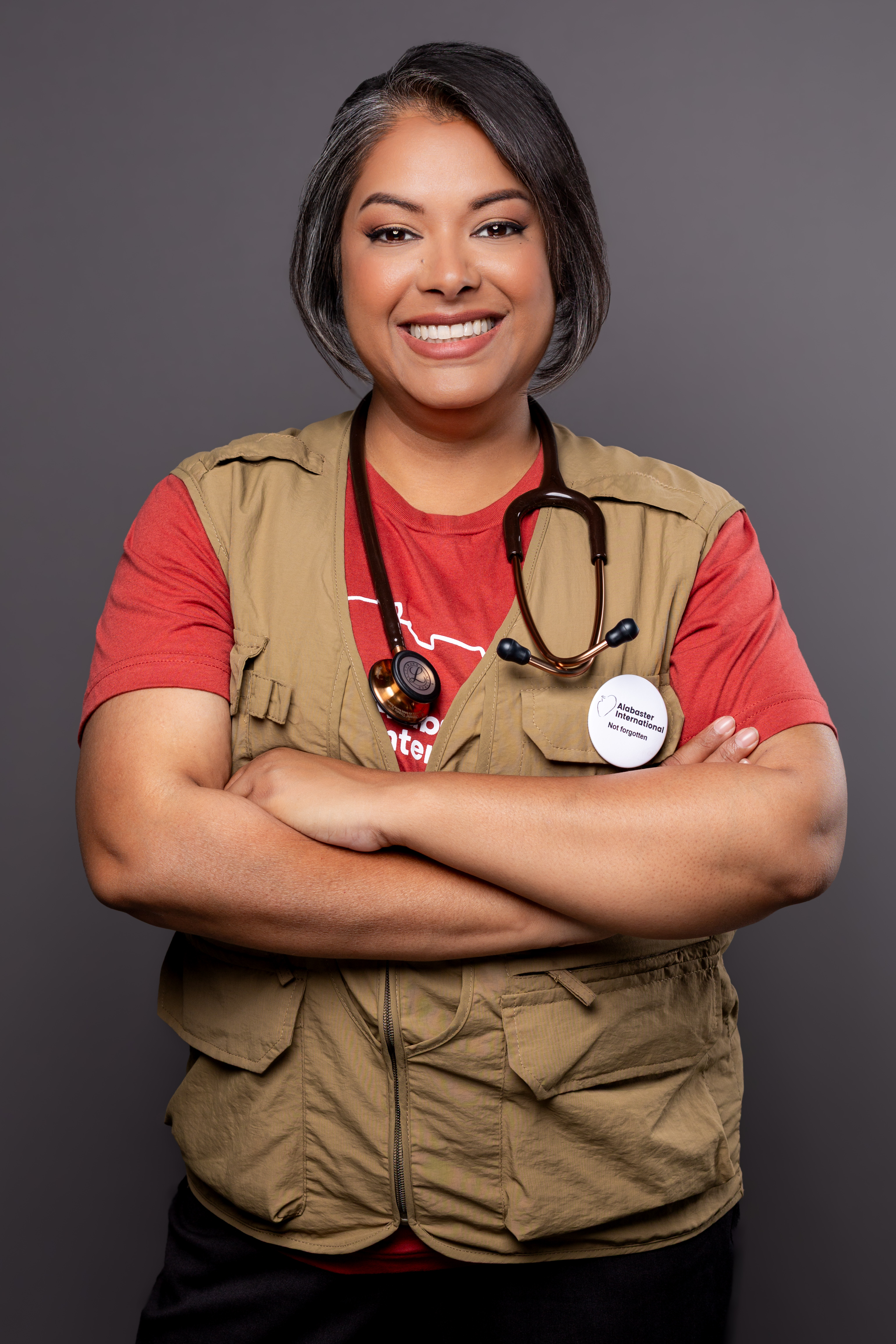
TEDx Speaker, Family Nurse Practitioner, global humanitarian, and Founder and CEO of Alabaster International
Shannon Fernando-Rubera is a Family Nurse Practitioner, TEDx speaker, and global humanitarian, as well as the Founder and CEO of Alabaster International. She leads frontline work in some of the world’s most underserved and conflict-affected regions, delivering mobile healthcare and building community-led systems in food sovereignty, women’s entrepreneurship, and education. Based in Los Angeles, Shannon is known for going where others won’t—connecting local communities to real, life-changing impact around the world.